What is PRP hair treatment?
PRP (Platelet Rich Plasma) is an advanced treatment that utilizes your body's platelets to combat hair loss and promote hair growth.
The philosophy behind this treatment is based on the principle that platelets contain growth factors that can "awaken" dormant hair follicles.
During the procedure, a small amount of blood is drawn from your arm, which is then specially processed to concentrate the platelets.
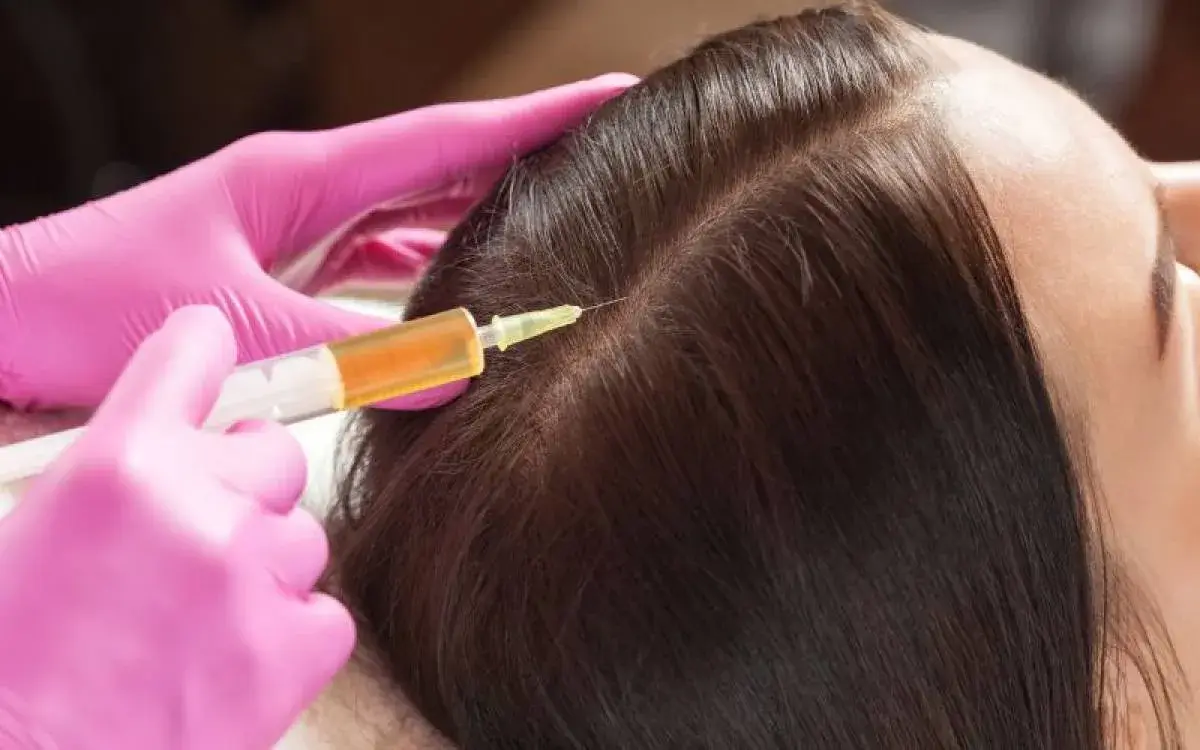
The resulting plasma is rich in nutrients and growth factors and is injected into the thinning areas of the scalp.
How PRP works for hair
When platelet-rich plasma is injected into the scalp, it directly reaches the hair root. There, the growth factors it contains:
- Stimulate blood circulation in the area
- Activate follicle stem cells
- Prolong the hair growth phase
- Enhance the creation of new blood vessels
- Improve hair quality and thickness
Advantages of PRP for hair
Natural approach
PRP harnesses the body's natural ability to heal and regenerate, without the use of synthetic substances or drugs.
Minimally invasive
No surgery or long recovery time is required. You can return to your daily activities immediately after the treatment.
Combination possibilities
PRP can be combined with other treatments such as: - Hair mesotherapy - Medication - Hair transplantation (as a supportive treatment)
Who can benefit from PRP hair treatment?
PRP treatment proves particularly effective for various types of hair loss, especially in early and moderate stages:
Androgenetic alopecia
The most common form of hair loss affecting both men and women. Characterized by gradual thinning, usually on the crown of the head and temples in men, while in women it appears as diffuse thinning.
Alopecia areata
An autoimmune condition that causes sudden hair loss in small, circular patches. PRP hair treatment can help activate follicles that are in a "dormant" state.
Seasonal hair loss
This is increased hair loss that occurs mainly in autumn and spring. Although often temporary, it can persist and become more intense over time if not treated correctly.
Stress-related hair loss
Intense stress or physical strain can lead to hair thinning. However, this type of hair loss usually responds well to treatments like PRP.
The Hair PRP Procedure
Preparation
Before the treatment, it is important to avoid: - Alcohol consumption 24 hours prior - Smoking for better plasma quality - Anti-inflammatory drugs (unless essential) - Anticoagulant medications with the doctor's consent
Blood Collection
Approximately 20-60ml of blood is drawn from your arm, depending on the extent of the area needing treatment. The procedure is quick and painless, similar to a regular blood test.
Centrifugation
The blood is placed in a special centrifuge device that separates its components. Within 10-15 minutes, platelet-rich plasma is produced, which contains concentrated growth factors.
Application
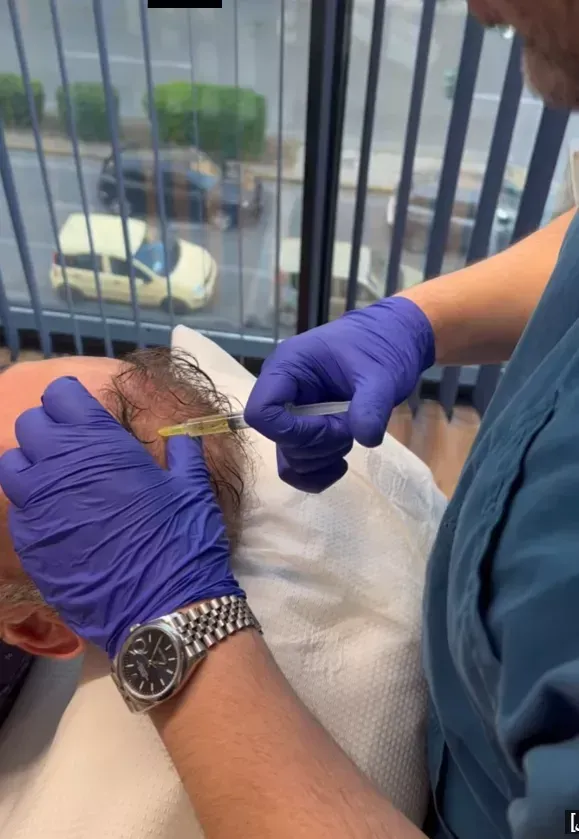
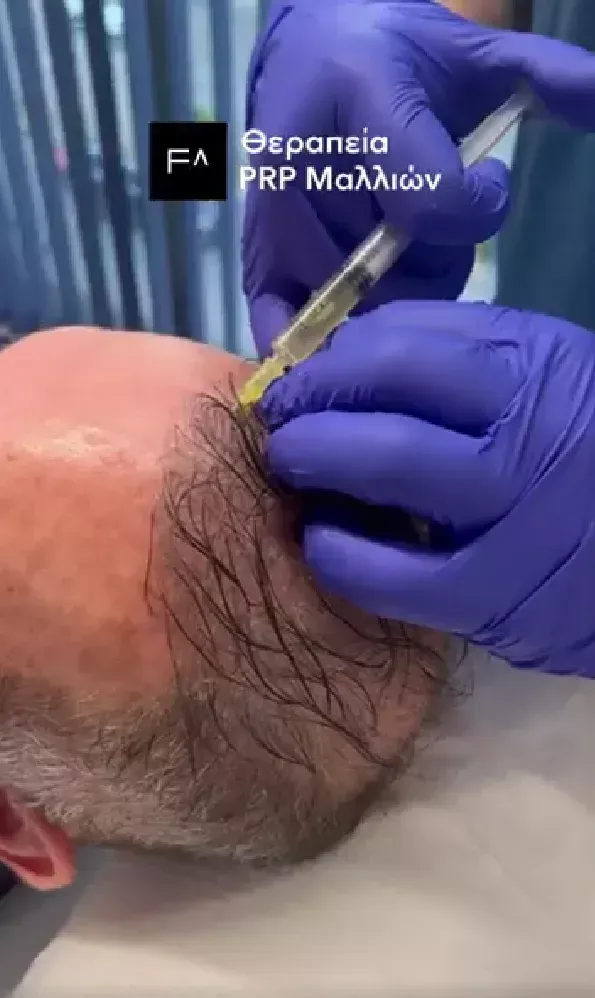
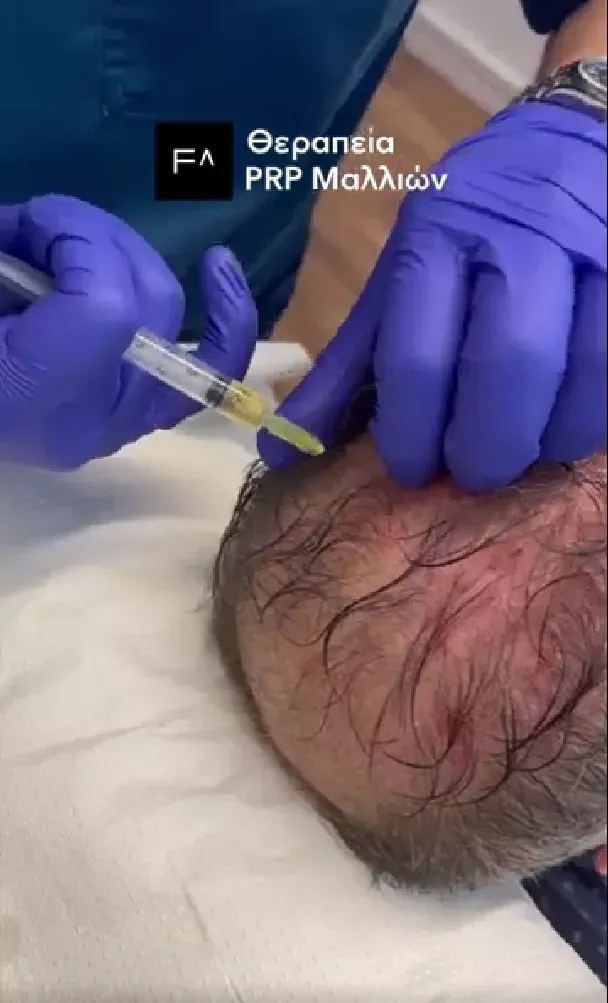
PRP is injected into the scalp with fine needles, in areas showing thinning or hair loss. The procedure is relatively painless, although topical anesthetic cream can be applied for greater comfort. The total duration of the treatment ranges from 45 minutes to 1 hour.
Post-PRP treatment care
First 24 hours:
- Do not wash your hair - Avoid intense exercise - Avoid excessive sun exposure
First week:
- Use mild sulfate-free shampoos - Do not rub the area vigorously - Avoid heat, e.g., hairdryer
Long-term care
- Adopt a healthy diet rich in proteins and vitamins - Regular follow-up with a specialist
Hair PRP results: What to expect
Immediate results (1-2 weeks)
- Reduction in daily hair loss - Improvement in texture and shine of existing hair - Reduced scalp irritation
Medium-term results (2-3 months)
- Appearance of new hairs in thinning areas - Increase in thickness of existing hairs - General improvement in hair volume
Long-term results (3-6 months)
- Significant increase in hair density - Stronger and more resilient hair - Restoration of natural hair growth
Optimal results
For best results, it is recommended:
- 3-4 initial sessions 4-6 weeks apart
- Maintenance sessions every 6-12 months
- Combination with supportive therapies if required
Factors that improve results:
- Timely treatment
- Healthy lifestyle
- Appropriate nutrition
- Consistency in sessions
Dr. Dimitroulas Nikolaos
- Physician
Modern developments in PRP
New technologies:
Enhanced PRP
Combination with growth factors
Microneedling with Dermapen + PRP
Deeper penetration of nutrients
Centrifugation improvements:
Higher platelet concentration
PRP for hair: Side effects and safety
- It is considered extremely safe as it uses your own biological material, contains no synthetic substances, and thus dramatically reduces the risk of allergic reactions.
Mild and temporary side effects
- Mild pain or tenderness at the application site
- Mild redness that subsides within 24-48 hours
- Minor swelling in the injection area
- Rarely, minor bruising that subsides in a few days
When to avoid the treatment
- Active skin infections on the scalp
- Hematological disorders
- Autoimmune diseases in acute phase
- Pregnancy and breastfeeding
- Chronic systemic diseases without medical supervision
PRP vs PRF: The next generation of treatment
The evolution in regenerative medicine has brought PRF (Platelet-Rich Fibrin), an advanced technology that is changing the landscape in hair loss treatment.
- PRP - The established choice
- PRF - The new generation
Which is more effective
PRP advantages:
- Immediate results
- High concentration of bioactives
- Ideal for advanced hair loss
PRF advantages:
- Long-lasting action
- More natural biological response
- Fewer side effects
What to choose
Choose PRP:
- If you want faster initial results
- You have advanced hair loss
- You are interested in combining with other treatments
Prefer PRF:
- If you have sensitive skin
- You are in an early stage of hair loss
- You want long-term natural restoration
PRP vs. Hair Transplant
Hair transplantation is a definitive solution for advanced alopecia, while PRP is ideal for prevention and treatment of early stages. They are often combined for optimal results.
PRP vs. Mesotherapy
Mesotherapy uses synthetic ingredients, while PRP utilizes the body's natural growth factors.
Conclusion
Hair PRP represents an evolution in hair loss treatment, offering a natural, safe, and effective solution. By harnessing your own biological power, it stimulates the growth of healthy, strong hair without invasive procedures.
Book your appointment at Facemed Clinic and treat your hair loss.
Does the procedure hurt?
Most people feel only a slight discomfort, similar to a simple injection. If necessary, a topical anesthetic cream can be used to make the procedure even more comfortable.
When will I see the first results?
The first signs of improvement (reduction in hair loss) usually appear after 2-4 weeks. New hair growth takes approximately 2-3 months to become visible.
Can I do PRP if I am taking medication for hair loss?
The treatment can usually be combined with most hair loss medications. For your safety and best results, it is important to inform your doctor about all medications or supplements you are taking.
Are the results permanent?
Results typically last 12-18 months, and maintenance sessions are recommended for best preservation.
Are there any age restrictions?
Hair PRP can be applied to adults of all ages. Younger patients usually experience better results.
Can hair get worse after treatment?
Rarely, a temporary increase in hair loss (shock loss) is observed in the first few weeks, which is a normal reaction and should not concern you.
How much does it cost?
The price for hair PRP is 150€.
PRP Hair Treatment – Price
Autologous PRP hair mesotherapy starts from €150 per session.
All prices by area
- Αυτόλογη Μεσοθεραπεία Μαλλιών (PRP) · PRP Μαλλιά — 150€
Where we do PRP hair treatment: Athens, Gerakas, Tripoli
The same medical protocol, the same prices and medical supervision at all three Facemed Clinic locations.