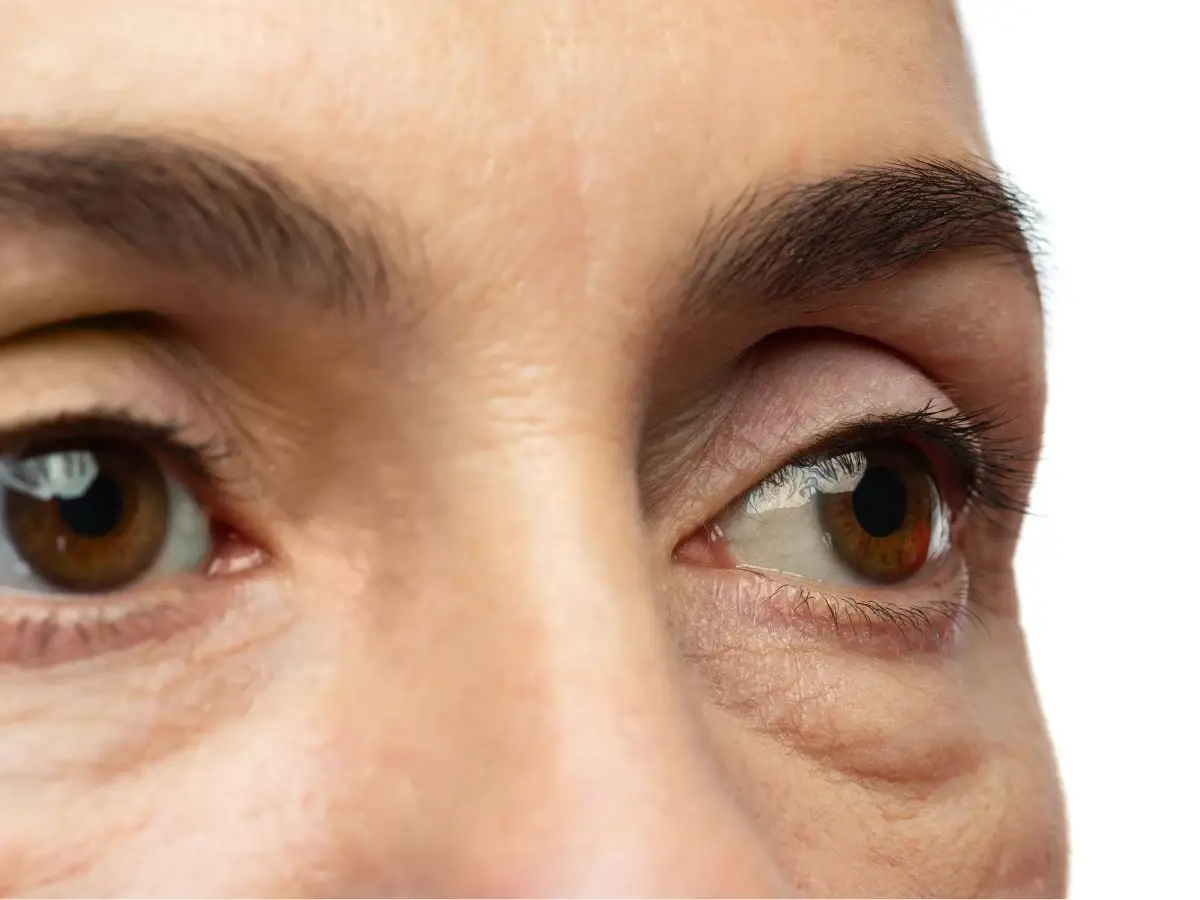
What are under-eye bags?
Under-eye bags appear as mild or even pronounced swelling in the lower eyelid area. Anatomically, this is due to the gradual relaxation of the muscles and tissues surrounding the eyes. As these supporting structures weaken, the fat that normally protects the eyes begins to protrude forward, creating the characteristic "bag" appearance.
At the same time, the area can accumulate fluids, which worsens the appearance of the puffiness. This combined action, where tissues relax, fat shifts, and fluid retention occurs, creates what we perceive as under-eye bags.
Shadows vs. actual bags: The difference
Often, what we consider to be bags is actually shadows created by the hollow area under the eyes (tear trough). This distinction is crucial for choosing the correct treatment:
- Actual bags: This is real puffiness that remains even when you look down or gently stretch the skin.
- Shadows/hollows: They disappear when you change the lighting angle or when you smile. They require a different therapeutic approach, usually with fillers.
Why do bags and puffiness form under the eyes?
Natural aging: The main cause
The most common cause of under-eye bags and puffiness is the natural aging process. From age 25 onwards, the body begins to produce less collagen and elastin (the proteins that keep skin firm and elastic).
As these proteins decrease, the skin in the delicate eye area, which is already 40% thinner than the rest of the face, begins to lose its structure. The muscles around the eyelids weaken, allowing fat cells to "drop" downwards.
Genetic factors
Heredity plays a significant role in the development of under-eye bags. If your parents have this characteristic, it is likely that you will develop it too. Genetic factors influence:
- The density and elasticity of the skin
- The distribution of subcutaneous fat
- The structure of the muscles around the eyes
- The tendency for fluid retention
Lifestyle factors
Certain habits and lifestyle choices can accelerate or worsen the appearance of bags:
- Lack of sleep: When you don't get enough sleep, blood vessels dilate and become more visible under the thin skin of the eyes.
- High salt intake: Salty foods cause fluid retention, which can often manifest first in the eye area.
- Smoking: Nicotine restricts blood circulation and destroys collagen, thereby accelerating skin aging.
- Excessive sun exposure: UV radiation breaks down collagen and elastin, further thinning the delicate eye area.
Specialized medical conditions
Thyroid disorders
Both hyperthyroidism and hypothyroidism can cause significant changes in the eye area:
- Hyperthyroidism: Can cause bulging eyes (exophthalmos) and eyelid swelling.
- Hypothyroidism: Often associated with generalized fluid retention that manifests intensely in the eye area.
Kidney diseases
Chronic kidney disease affects the body's ability to excrete fluids, resulting in swelling often appearing first in the eyes, especially in the morning.
Infections and blockages
- Eye infections: Blepharitis, conjunctivitis, and other infections can cause chronic swelling.
- Blocked tear ducts: Can lead to fluid accumulation and chronic swelling in the area.
Festoons and Malar Bags: The "cousins" of Under-Eye Bags
It is important to understand the difference between classic under-eye bags and those from specialized conditions:
- Festoons: These are larger bags that extend lower onto the cheek. They are caused by skin and muscle relaxation and are more difficult to treat.
- Malar Bags: Located in the cheek area, just below the eyes. They are often confused with under-eye bags but require a different therapeutic approach.
Age-Based Strategy: The Right Timing for Every Age
20s: The Decade of Prevention
In your 20s, your skin still has abundant collagen and elastin. The strategy focuses on prevention:
Daily care:
- Daily use of SPF 30+ sunscreen
- Moisturizing eye cream with hyaluronic acid
- Gentle makeup removal
- 7-8 hours of sleep every night
Preventative treatments:
- Mild chemical peelings every 6 months
- Vitamin C serums for antioxidant protection
30s: Early Intervention
In your 30s, the first signs of aging may begin to appear. The strategy combines prevention with targeted treatment:
Enhanced care:
- Creams with retinol to stimulate collagen
- Peptides to enhance elasticity
- Caffeine to improve circulation
Treatments:
- Eye mesotherapy every 6 months
- Polynucleotides
- Mild laser treatments
- Eyecon therapy
40s+: Comprehensive Treatment
From 40 onwards, a more comprehensive approach is needed:
- Fillers for hollows
- Mesotherapy for tightening
- Fractional laser for regeneration
- Maintenance every 3-4 months
Seasonal Approach
Winter: The Ideal Season for Treatments
Winter is the best season for most treatments:
Advantages:
- Less sun exposure
- Lower risk of hyperpigmentation
- Easier recovery
- Maintenance every 3-4 months
Specific needs:
- More intense hydration due to dryness
- Protection from cold and wind
- Vitamin D supplements for skin support
Summer: Attention and Protection
Summer requires more attention:
Strategy:
- Strict sun protection
- Avoidance of intense treatments
- Increased hydration
Summer tips:
- Sunglasses
- Wide-brimmed hats
- Cold compresses for heat-induced swelling
Hormonal Fluctuations and Influences
Pregnancy:
- Before period: Increased fluid retention
- Strategy: Sodium reduction, more water
Menstrual Cycle:
- Increased fluid retention
- Avoidance of injectable treatments
- Natural methods and cold compresses
Menopause:
- Estrogen reduction affects elasticity
- More intensive care with retinol and peptides
Modern Treatments for Under-Eye Bags
Eye Mesotherapy
Mesotherapy is an extremely effective method for treating under-eye bags. Through the injection of hyaluronic acid, vitamins, and peptides directly into the skin, the treatment:
- Improves hydration and elasticity
- Boosts collagen production
- Reduces swelling and inflammation
- Offers instantly visible results
Hyaluronic Acid Fillers
Tear trough fillers are a special technique that targets the area under the eyes. Hyaluronic acid is injected to:
- Fill the hollow under the eyes
- Create a smooth transition from the eye to the cheek
- Reduce the appearance of shadows and puffiness
- Provide results that last 12-18 months
Carboxytherapy
Carboxytherapy uses carbon dioxide to improve circulation and tissue oxygenation. This treatment:
- Enhances microcirculation in the area
- Stimulates collagen production
- Improves skin elasticity
- Reduces fluid retention
Laser Therapy
Laser technologies offer targeted treatment:
- Fractional Laser: Creates microscopic "zones" of heat that stimulate skin renewal
Chemical Peelings
Chemical peelings improve the texture and radiance of the skin in the eye area:
- Remove damaged surface layers
- Stimulate cellular renewal
- Improve collagen production
- Reduce fine lines and discolorations
Eyecon Therapy: The Comprehensive Solution for Your Gaze
Eyecon is a specialized treatment that combines chemical peeling and mesotherapy, targeting both superficial and deeper causes of dark circles, bags, and wrinkles in the eye area.
Advantages:
- Reduces dark circles and hyperpigmentation
- Combats fluid retention and bags
- Smooths fine lines (crow's feet)
Blepharoplasty (Surgical Option)
- Immediate results: Visible despite swelling and bruising
- Final results: 3-6 months
- Duration: Permanent (10-15 years+)
- Recovery time: 1-2 weeks
What to expect from treatments
- Immediate results: Small improvements appear in 24-48 hours
- Optimal results: 2-4 weeks after treatment
- Duration: 6-18 months depending on the treatment
- Recovery time: Minimal to zero
Natural Methods and Prevention
Daily care
- Quality sleep: Aim for 7-9 hours of sleep every night and try sleeping with your head slightly elevated to prevent fluid accumulation
- Hydration: Drink at least 8 glasses of water daily as good hydration helps eliminate toxins and reduces swelling
Special eye cream: Use cream with:
- Caffeine (constricts blood vessels)
- Retinol (stimulates collagen production)
- Hyaluronic acid (hydrates)
- Peptides (enhance elasticity)
Immediate solutions for swelling
- Cold compresses: Place cold tea bags, cucumber slices, or cold spoons that you've put in the fridge for 10-15 minutes.
- Lymphatic drainage massage: Gentle upward and outward movements to facilitate fluid removal.
- Avoid allergens: If you have allergies, ensure their proper management
Dietary advice
- Sodium reduction: Limit processed foods and salt
- Anti-inflammatory foods: Incorporate omega-3 rich fish, green vegetables, berries, and nuts
- Vitamin C: Foods rich in vitamin C support collagen production
When to consult a specialist
Although under-eye bags are usually harmless, there are cases that require medical evaluation:
- Sudden or severe swelling
- Pain or irritation in the area
- Vision changes
- Swelling that does not subside with care
- Accompanying symptoms (fever, difficulty breathing)
A specialized doctor can assess your condition and suggest the most appropriate therapeutic approach.
Conclusion
Under-eye bags are a common aesthetic problem that can be effectively prevented and treated with natural practices and specialized therapies.
To achieve a more rested, bright, and youthful look, combine daily care, prevention, and appropriate treatments according to your age and needs. A specialized doctor from Facemed Clinic can suggest the ideal therapeutic approach for your needs.
Are the treatments for under-eye bags painful?
Most non-invasive treatments cause minimal discomfort. Topical anesthetic cream is also used where necessary for maximum comfort.
How long do the results last?
It depends on the treatment; for example, fillers last 12-18 months, while mesotherapy lasts 6-12 months.
Can I combine treatments?
Sometimes a combination of treatments offers optimal results. The specialist will suggest the most suitable approach based on your needs.
Are there any side effects?
Side effects are usually mild and temporary, such as slight swelling, redness, or bruising that subsides within a few days.
At what age can I undergo treatments?
There is no specific age, as assessments are made on a case-by-case basis, depending on skin condition and needs.