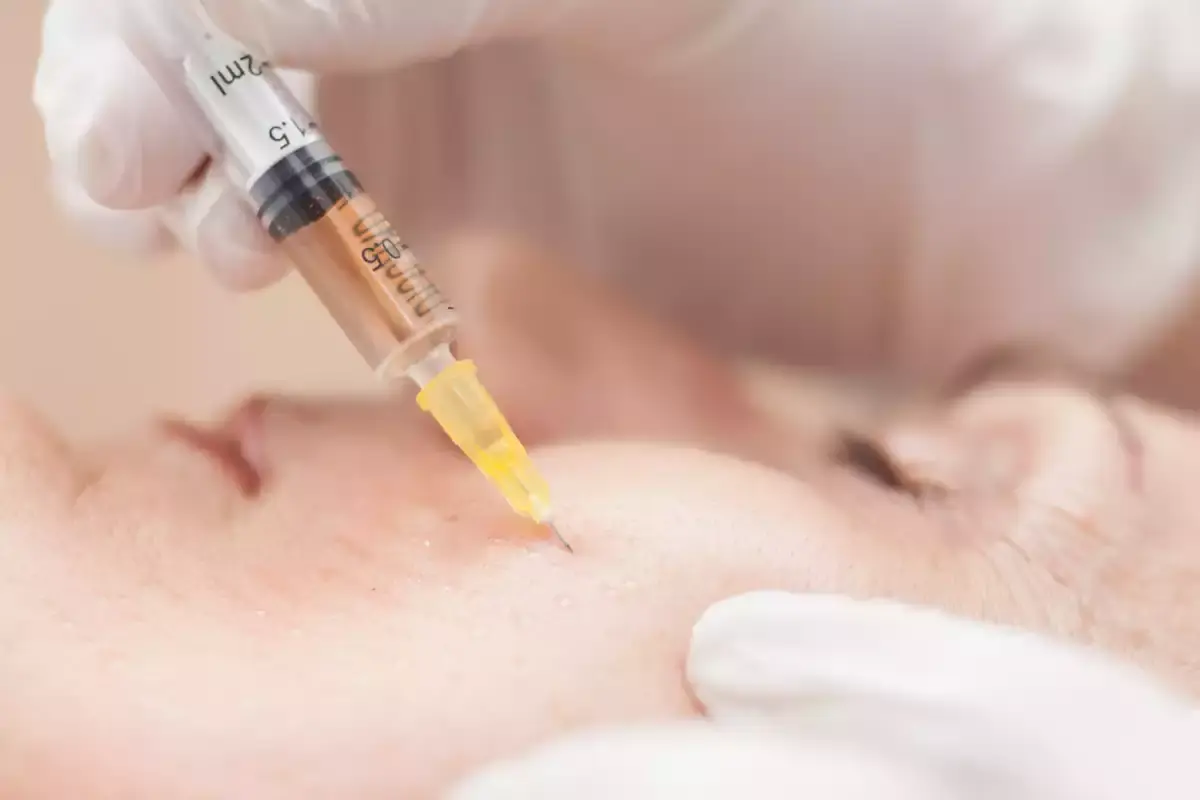
Where to get PRP treatment in Athens: at FaceMed Clinic in Athens (Argolidos 2), Gerakas (Thessalonikis 14) and Tripoli (Dimitros 64), from €150 for the face, by the clinic's medical team, after a personalised assessment. Book online or by phone on +30 210 692 9999.
What is PRP facial treatment?
PRP (Platelet Rich Plasma) is plasma that is rich in platelets and has a concentration 4 to 7 times greater than normal blood. Platelets are blood cells containing over 300 proteins with regenerative action, including growth factors that stimulate cell regeneration.
The treatment is based on the principle that platelets, when activated, release growth factors that accelerate healing and collagen production. This biological process utilizes the body's natural healing mechanism to improve skin texture, elasticity, and overall appearance.
What is platelet-rich plasma?
The platelet-rich plasma used in the treatment consists of two elements: plasma, or the liquid part of the blood, and platelets, which are a type of cell that plays an important role in the healing process. They also contribute to clotting and contain growth factors that can activate cell production.
How PRP Therapy Works
When PRP is injected into the skin, these growth factors:
- They activate cells that produce collagen and elastin, helping the skin become firmer and smoother.
- They improve blood circulation, so the area is better nourished and renews faster.
- They reduce any inflammation or irritation, helping the skin heal more quickly.
- They enhance cell renewal, making the skin look fresher and more vibrant.
Benefits of PRP Therapy
Clinically proven benefits include:
Natural renewal
Utilizing your cells for regeneration
Improved texture
Smoother and more even skin
Increased elasticity
Firmer and more youthful skin
Pore reduction
Pores appear smaller and skin looks smoother
Natural glow
Healthy and vibrant skin appearance
Long-lasting results
Skin continues to improve naturally, without the need for frequent treatments.
PRP application areas
PRP therapy can be applied to:
Face
Entire face or specific areas
Eye area
For dark circles and fine lines
Neck and décolletage
Areas showing signs of aging
Scalp
For hair loss treatment
Hands
For anti-aging and texture improvement
Facial PRP: Targeted treatment
PRP application on the face addresses specific problems related to skin aging and damage:
Fine lines and wrinkles
Increased collagen production reduces the appearance of aging signs.
Discoloration and acne scars
Cellular renewal improves skin tone uniformity.
Loss of volume
The natural firming induced by PRP partially restores lost elasticity.
Skin dullness
Improved circulation and renewal offer a natural glow.
Facial PRP therapy procedure
The treatment lasts approximately 45-60 minutes and includes three basic stages:
Blood draw
First, a small amount of blood is drawn from your arm. Usually, no more than 10 ml is required.
Centrifugation
Next, the blood is placed in a special centrifuge machine that separates its components. Through this process, platelet-rich plasma is isolated.
Application
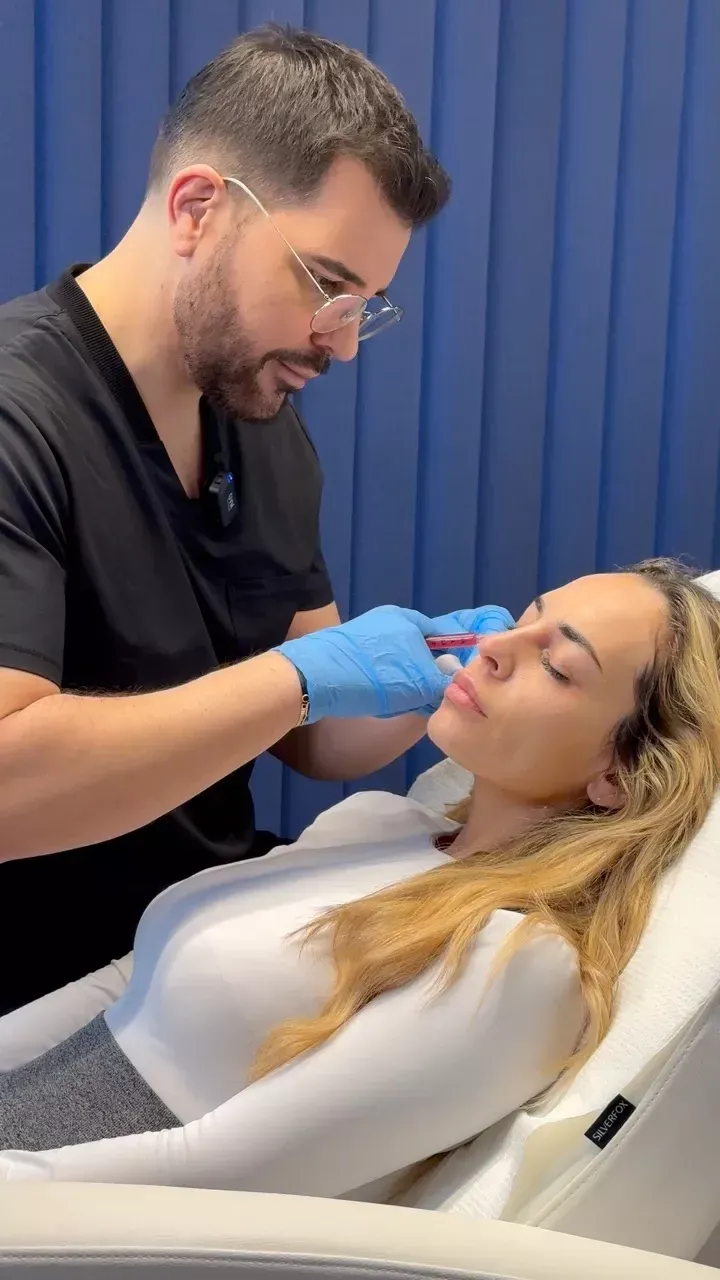
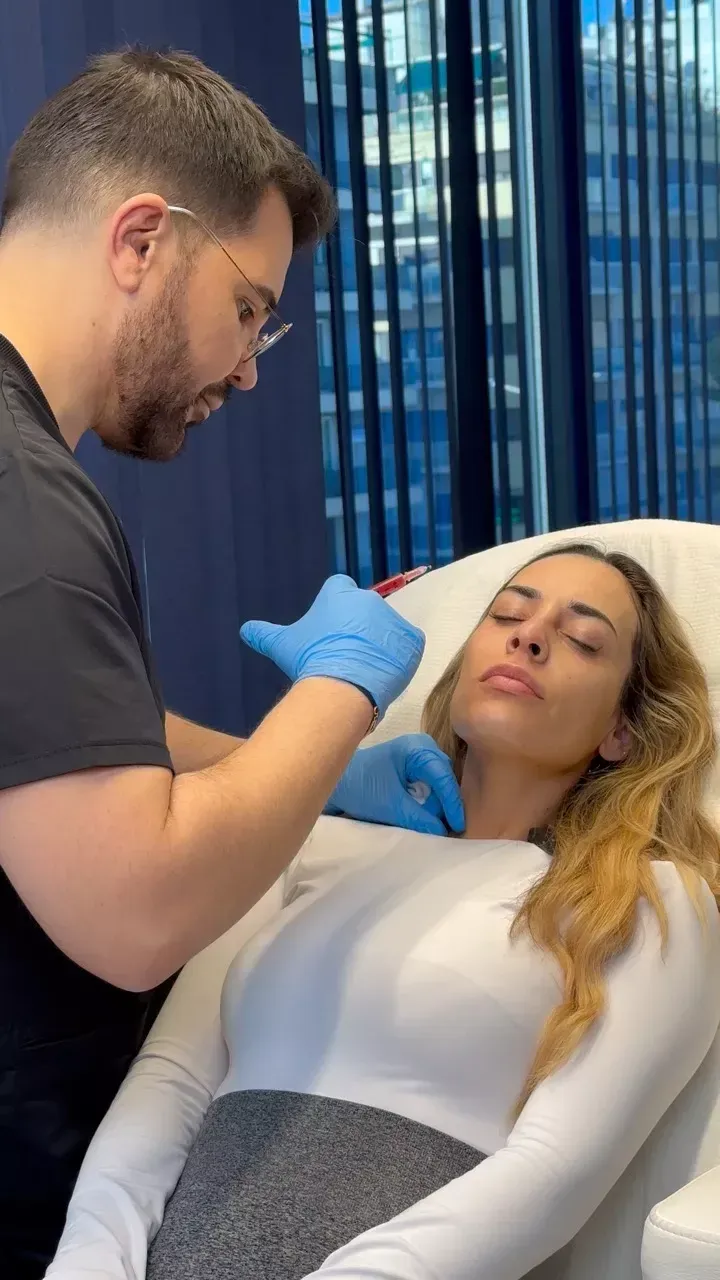
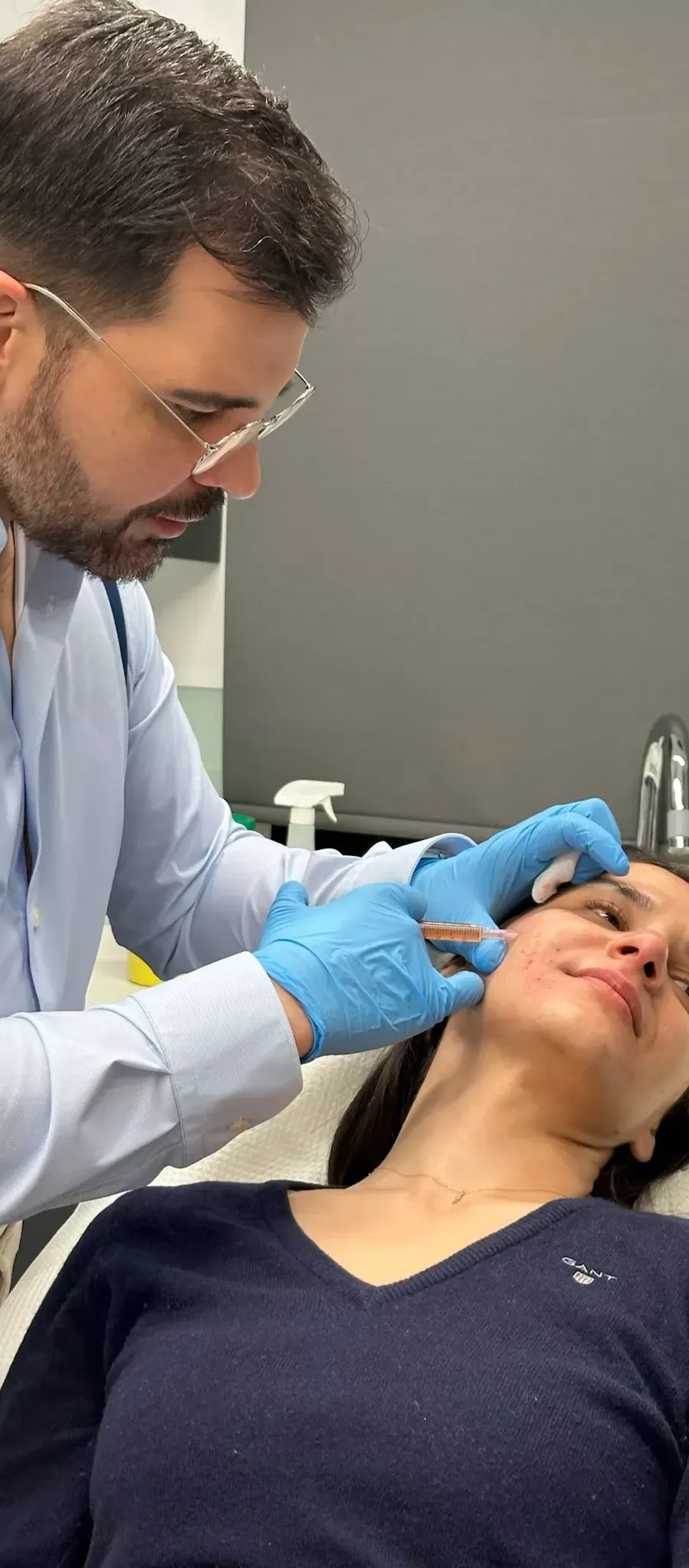
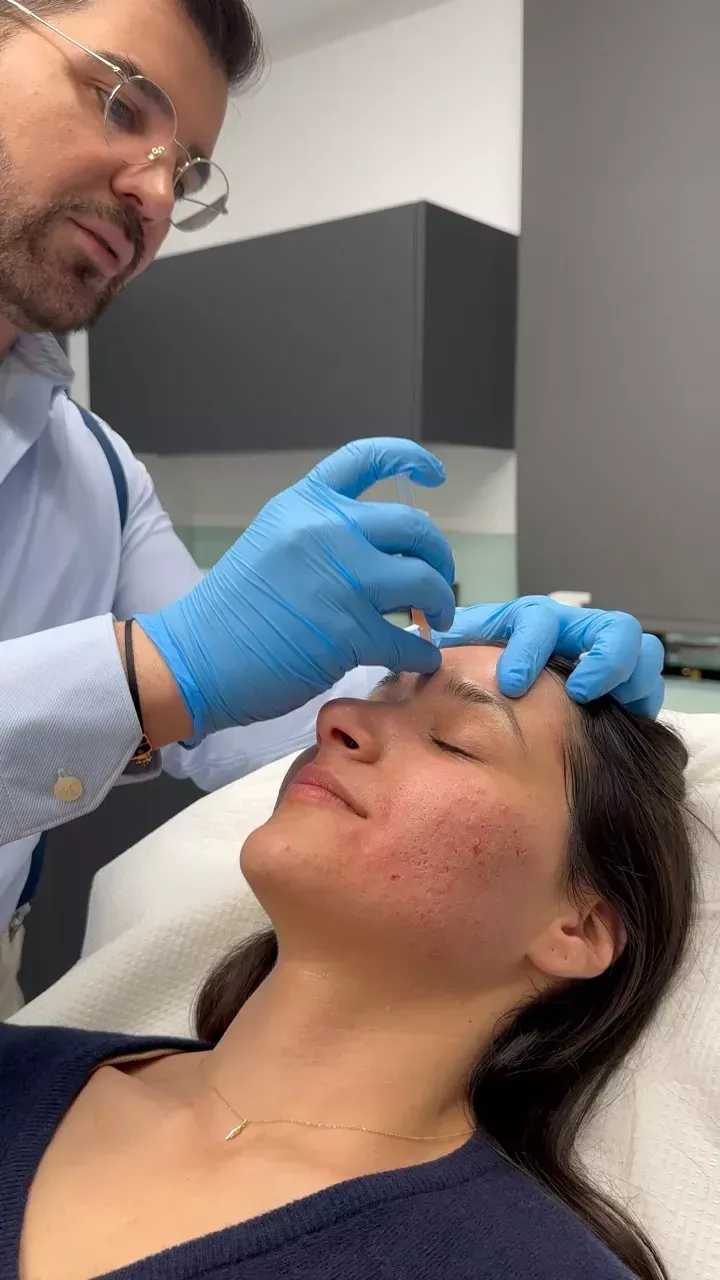
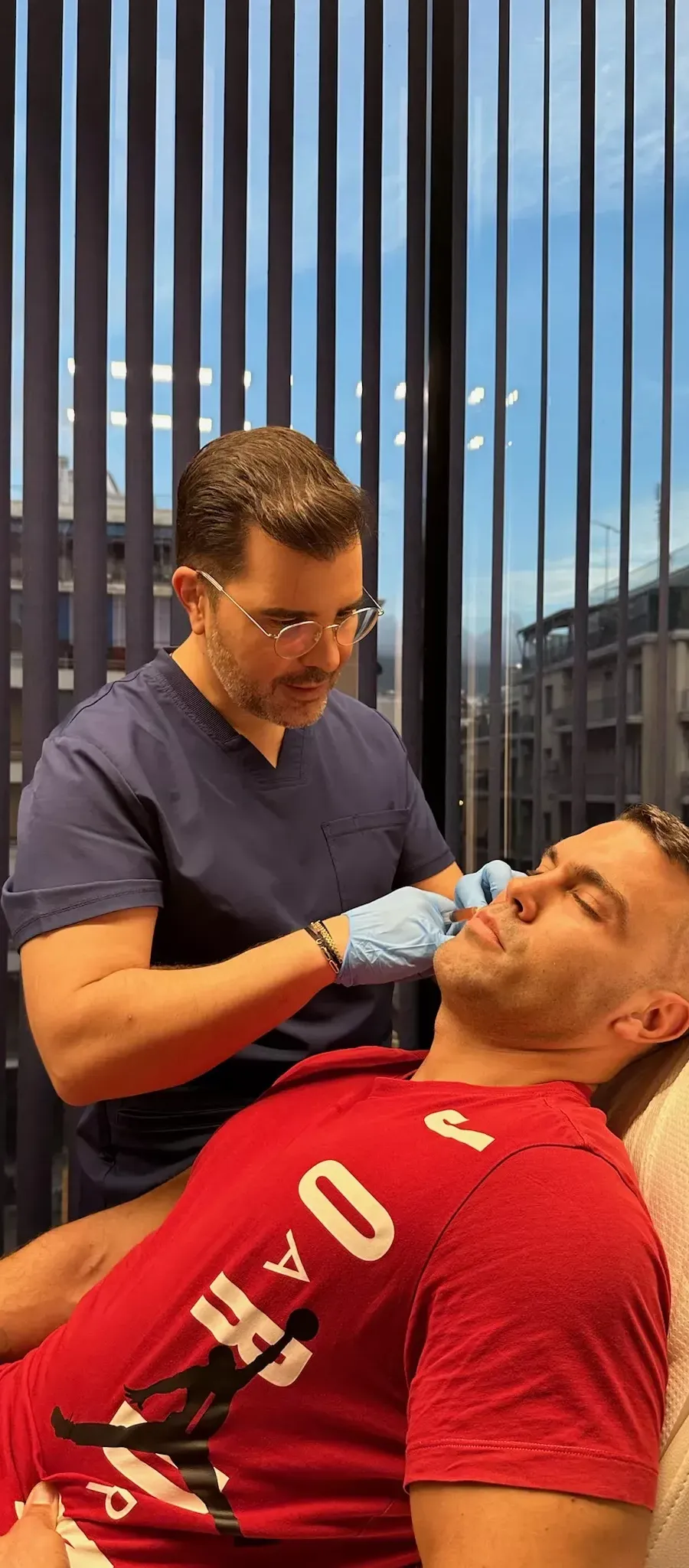
Finally, the platelet-rich plasma is injected into the area we want to treat.
Post-treatment care
During the first 24-48 hours:
- Avoid makeup in the area
- Gently cleanse with mild products
- Avoid makeup in the area
PRP: When results become visible
The results of PRP treatment are not immediate, because they are based on the natural renewal of the skin. The skin needs some time to “work” on its own, so the results appear gradually, over the following weeks:
First 2 weeks
Initial improvement in skin appearance and texture
2-3 weeks
First visible results of radiance and elasticity appear
4-5 weeks
Significant improvement in fine lines and overall texture
2-3 months
Maximum results as collagen production peaks
For optimal results, a course of 3-4 sessions at intervals of 4-6 weeks is recommended.
How long does PRP last?
The duration of results depends on various factors:
Patient age
Younger individuals tend to have longer-lasting results
Lifestyle
Smoking, sun exposure, and poor nutrition reduce duration
Initial skin condition
The healthier and better cared for the skin, the longer the results last.
Post-treatment care
Proper care and sun protection extend the benefits.
Generally, results last 6-12 months, and maintenance sessions are recommended every 6-9 months.
- PRP
- Classic mesotherapy
PRP treatment against hair loss
PRP for hair on the scalp has shown significant results in treating androgenetic alopecia. Growth factors enhance circulation to the hair follicles, improve their nourishment, and slow down hair loss. If facial skin rejuvenation is what you are after, read about facial mesotherapy – price and how it differs from PRP.
PRP Treatment Contraindications
- Hematological diseases: Blood cancer, bleeding disorders
- Infectious diseases: HIV, Hepatitis B or C
- Anticoagulant therapy: Individuals taking anticoagulant medications
- Pregnancy and breastfeeding: Avoided for precautionary reasons
- Active skin infections: In the application area
PRP at different ages
PRP treatment is not a "one-size-fits-all" solution. Each age group presents unique needs that require a specialized approach.
20-30 years old:
Ideal for prevention, helps maintain radiance and delays the appearance of the first signs of aging. Fewer sessions are required, and results are immediately visible.
40-50 years old:
Aims to improve elasticity, reduce fine lines, and restore the healthy appearance of the face. Here, a complete cycle of sessions is recommended for more intense and long-lasting results.
60+ years old:
Focuses on the regeneration of mature skin that has lost its firmness. Usually requires more sessions and a combination of treatments for better results. The skin becomes smoother, more radiant, and gradually regains its healthy appearance.
Combination Treatments
How much does PRP treatment cost?
From €150 for the face, €200 face and neck, €250 face, neck and décolleté. The same prices at all three Facemed Clinic locations.
Does PRP treatment hurt?
It is performed with very fine needles, and a topical anesthetic cream is usually applied, making it almost painless.
Is PRP treatment safe?
This is a completely safe treatment, as it utilizes your own blood, thereby minimizing the risk of allergic reactions or rejection.
How often should I have PRP?
For optimal results, a course of 3-4 sessions every 4-6 weeks is recommended, followed by maintenance every 6-9 months.
Are there side effects from PRP treatment?
Potential side effects are minimal and temporary, such as slight redness or small bruises at the application sites, which subside quickly.
Conclusion
PRP therapy is one of the safest and most effective options for natural skin regeneration. It harnesses the power of your own cells and delivers visible and long-lasting results in reducing signs of aging, restoring radiance, and improving overall skin complexion.
Book your appointment at Facemed Clinic and rejuvenate your skin naturally.
PRP Facial Treatment – Price
PRP facial treatment starts from €150 (face), €200 face & neck, €250 face, neck & décolleté.
All prices by area
- Αυτόλογη μεσοθεραπεία (PRP) · Πρόσωπο — 150€
- Αυτόλογη μεσοθεραπεία (PRP) · Πρόσωπο & Λαιμός — 200€
- Αυτόλογη μεσοθεραπεία (PRP) · Πρόσωπο, Λαιμός & Ντεκολτέ — 250€
Where we do PRP facial treatment: Athens, Gerakas, Tripoli
The same medical protocol, the same prices and medical supervision at all three Facemed Clinic locations.
How many PRP facial sessions are needed?
The number of PRP facial sessions depends on the individual's needs and desired outcome. Typically, 3-4 sessions are recommended, spaced 4-6 weeks apart. To maintain the results, a booster session may be needed every 6-12 months.
When do the results of PRP facial treatment appear?
The first results of PRP facial treatment begin to become visible after 3-4 weeks, as the body needs time to produce new collagen and elastin. Improvement continues for the following months, with the final result being apparent approximately 3 months after the completion of the sessions.
How long do the results of PRP facial treatment last?
The results of PRP facial treatment typically last 12-18 months, depending on age, lifestyle, and the individual's skin condition. To maintain the results, it is recommended to repeat the treatment every 1-1.5 years.
Is PRP facial treatment painful?
PRP facial treatment is generally well-tolerated and not considered painful. Before the application, an anesthetic cream is used to minimize any discomfort. Most patients report a feeling of pressure or mild stinging during the injection.
Are there side effects from PRP facial treatment?
Side effects from PRP facial treatment are rare and mild, as the patient's own blood is used. The most common side effects include mild swelling, redness, or bruising at the injection sites, which subside within a few days. In rare cases, infection or an allergic reaction may occur.
What are the contraindications for PRP facial treatment?
PRP facial treatment is contraindicated in individuals with blood clotting disorders, autoimmune diseases, active infections, cancer, pregnancy, or breastfeeding. It is also not recommended for individuals taking anticoagulant medications or with a history of keloid scars.
What is the cost of PRP facial treatment?
The cost of PRP facial treatment varies depending on the number of sessions, the extent of the area to be treated, and the clinic you choose. It is important to discuss the cost with your doctor during your initial consultation.