Medically reviewed by: Loizidis Christoforos, Dermatologist - Venereologist — Last reviewed: April 24, 2026
Where to get alexandrite laser hair removal in Athens: at FaceMed Clinic in Athens (Argolidos 2), Gerakas (Thessalonikis 14) and Tripoli (Dimitros 64), from €20 per session (upper lip), by the clinic's specialised team, after a personalised assessment. Book online or by phone on +30 210 692 9999.
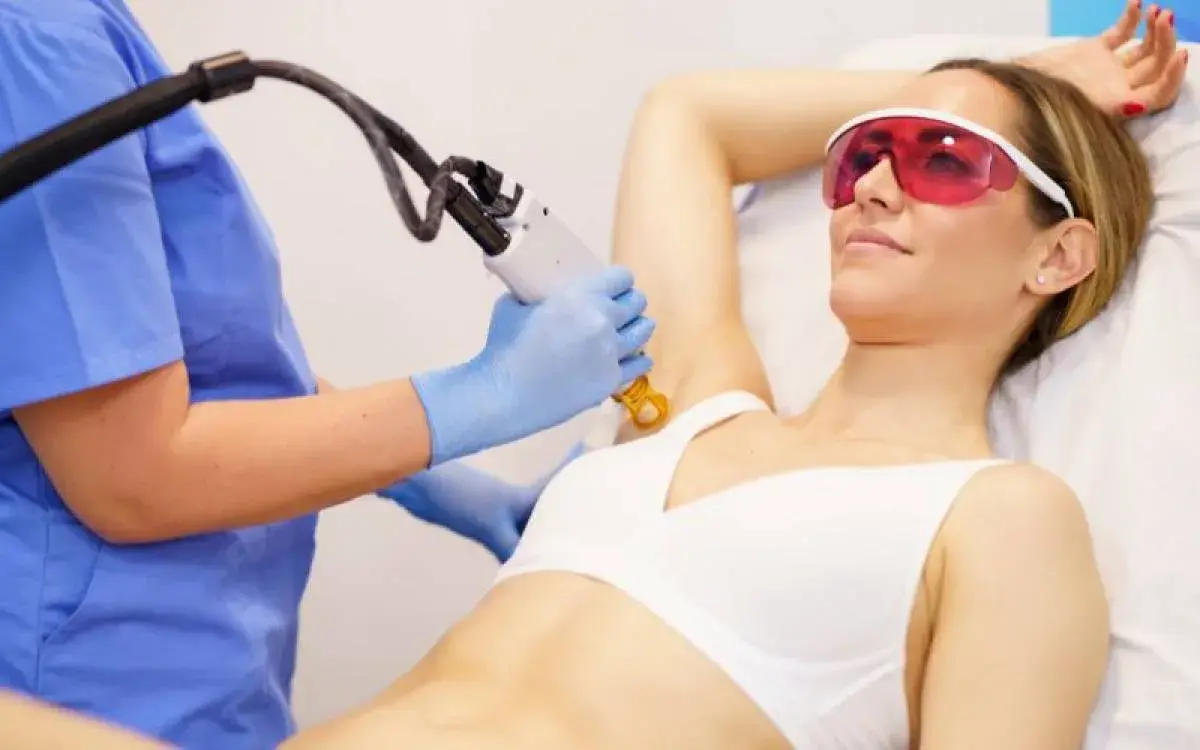
Candela GentleLase Alexandrite laser: how it works
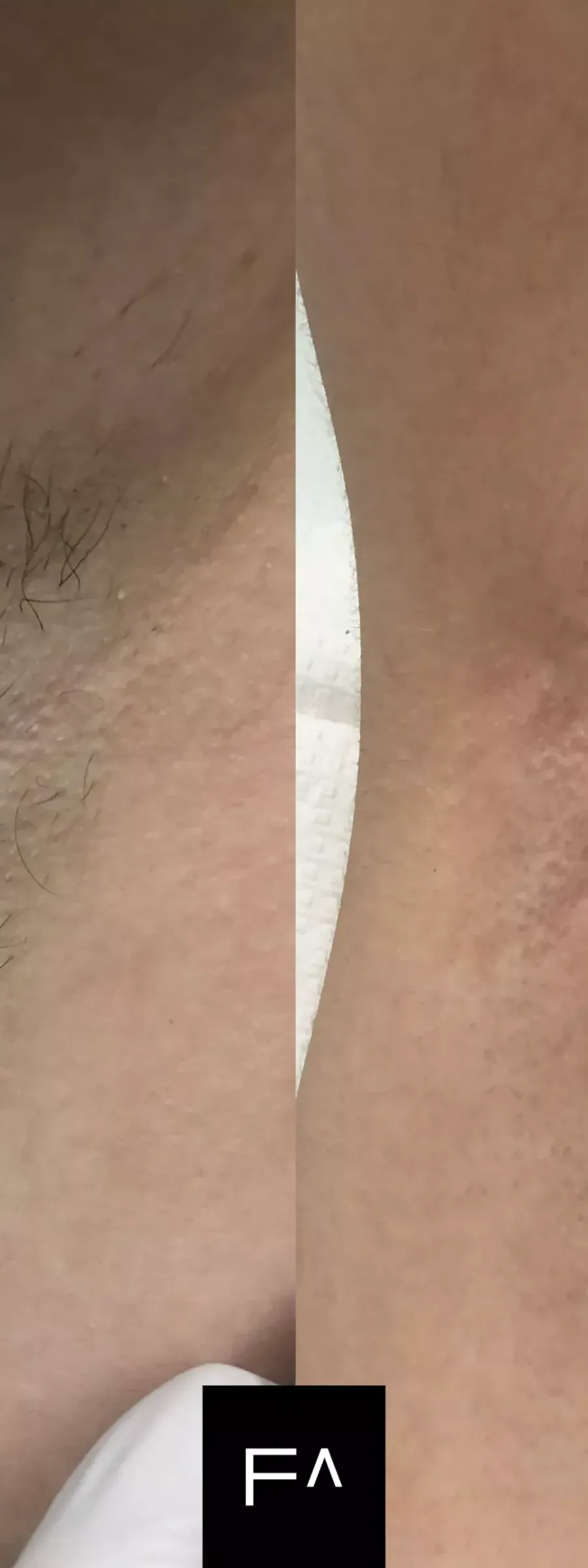
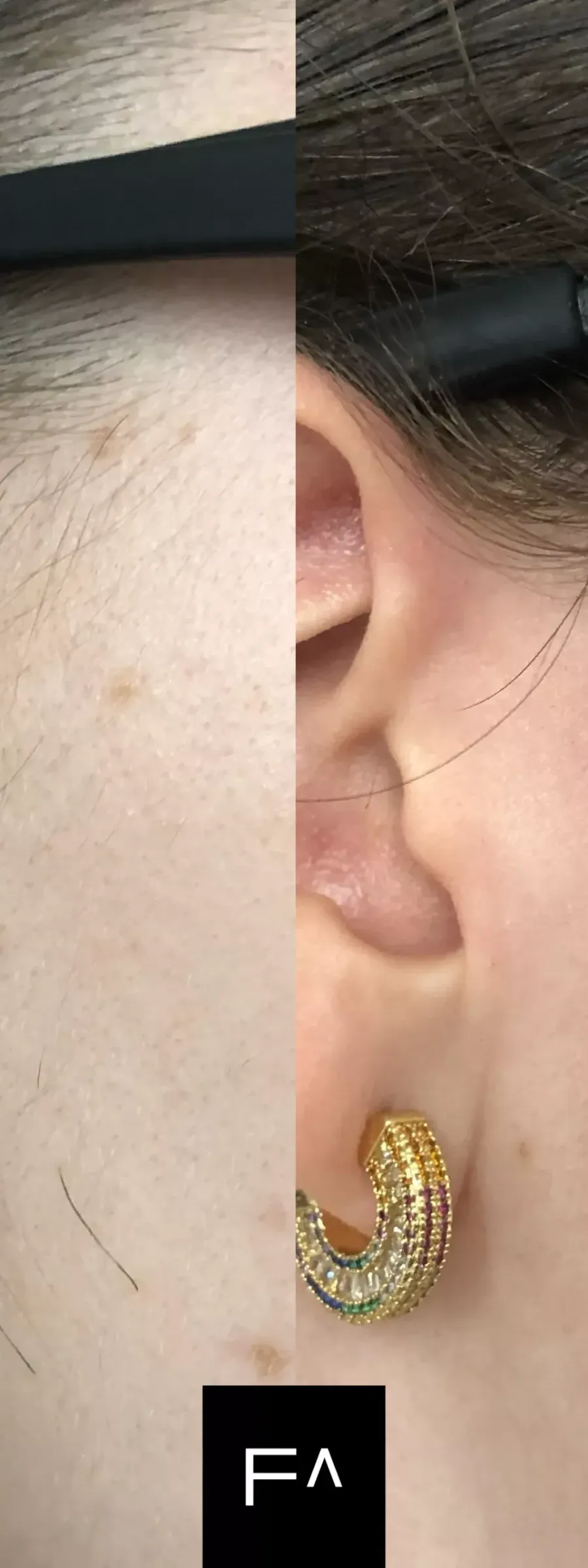
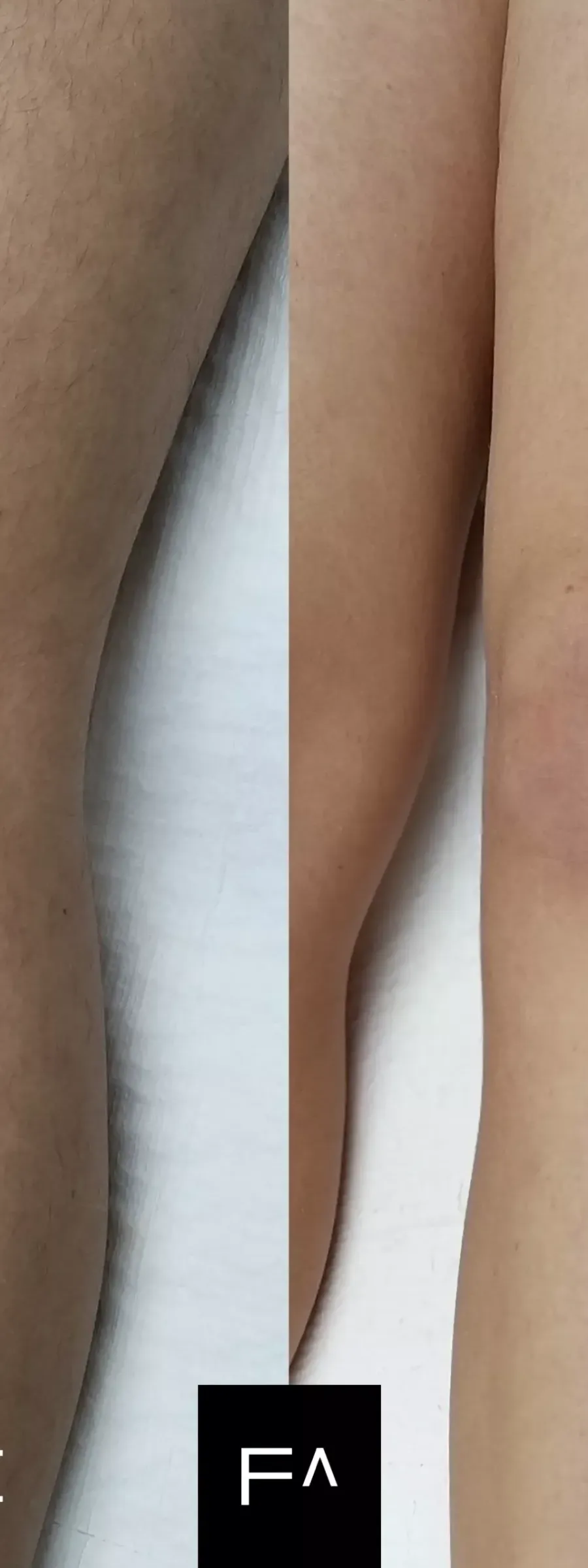
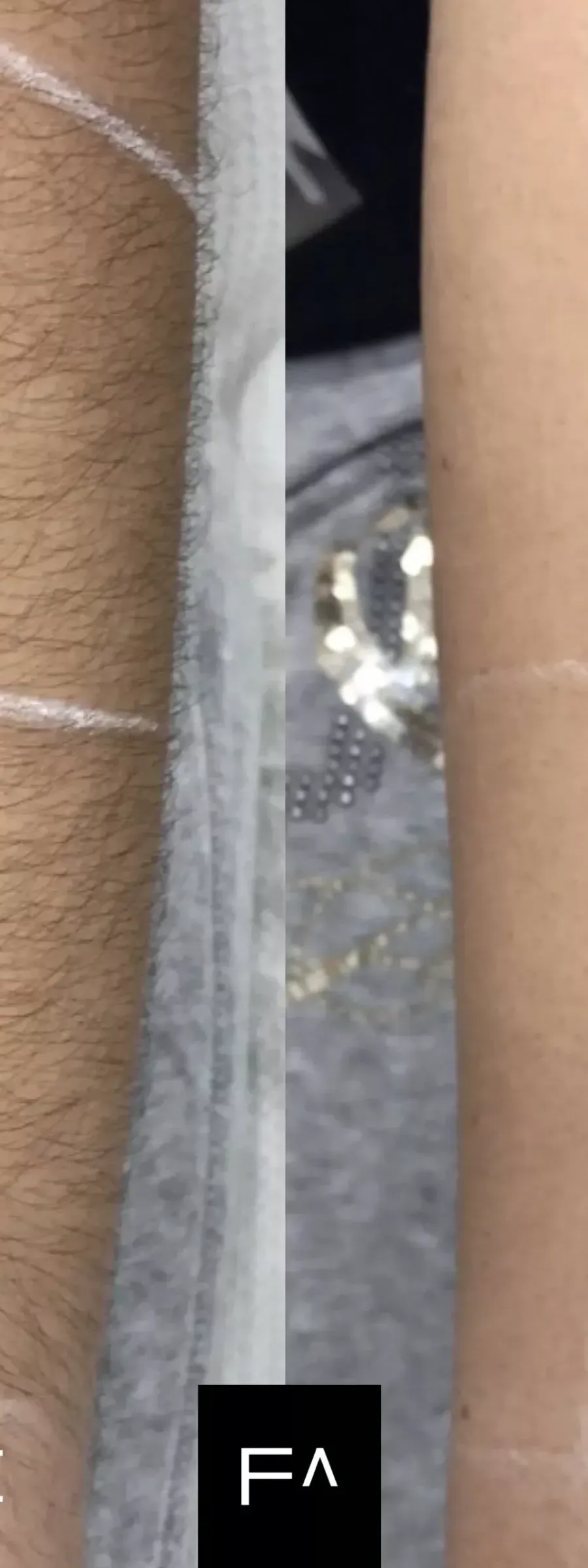
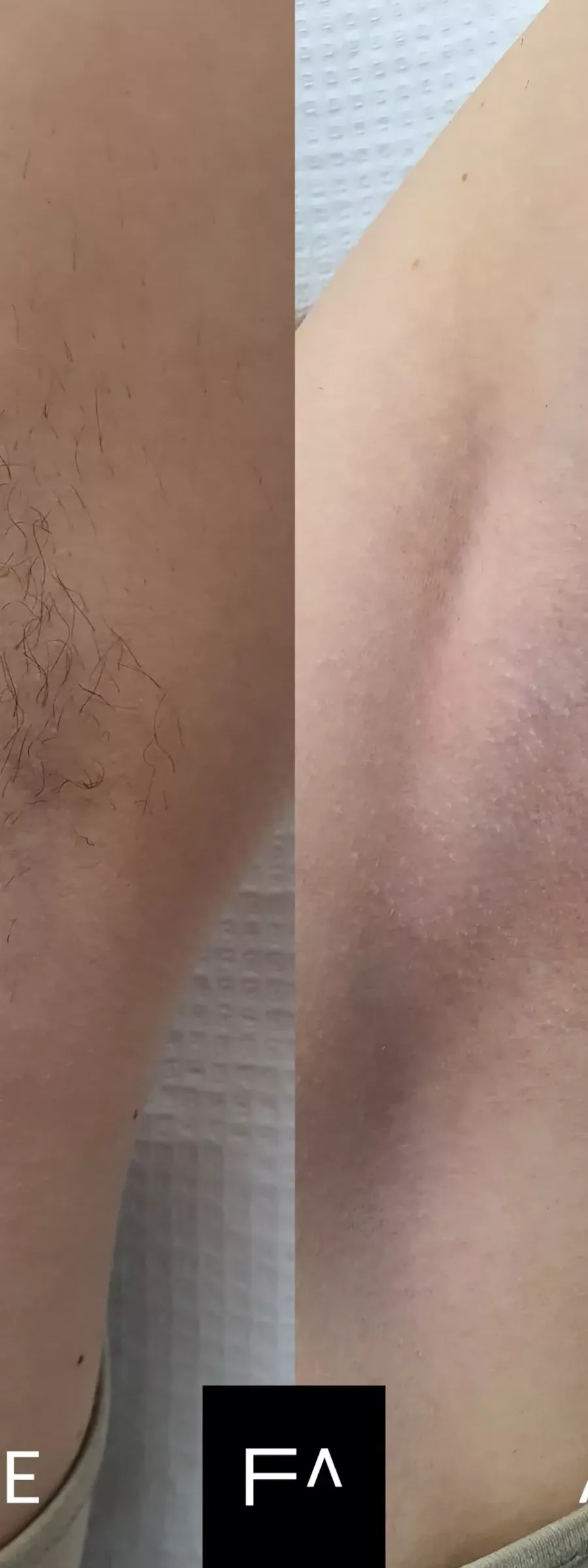
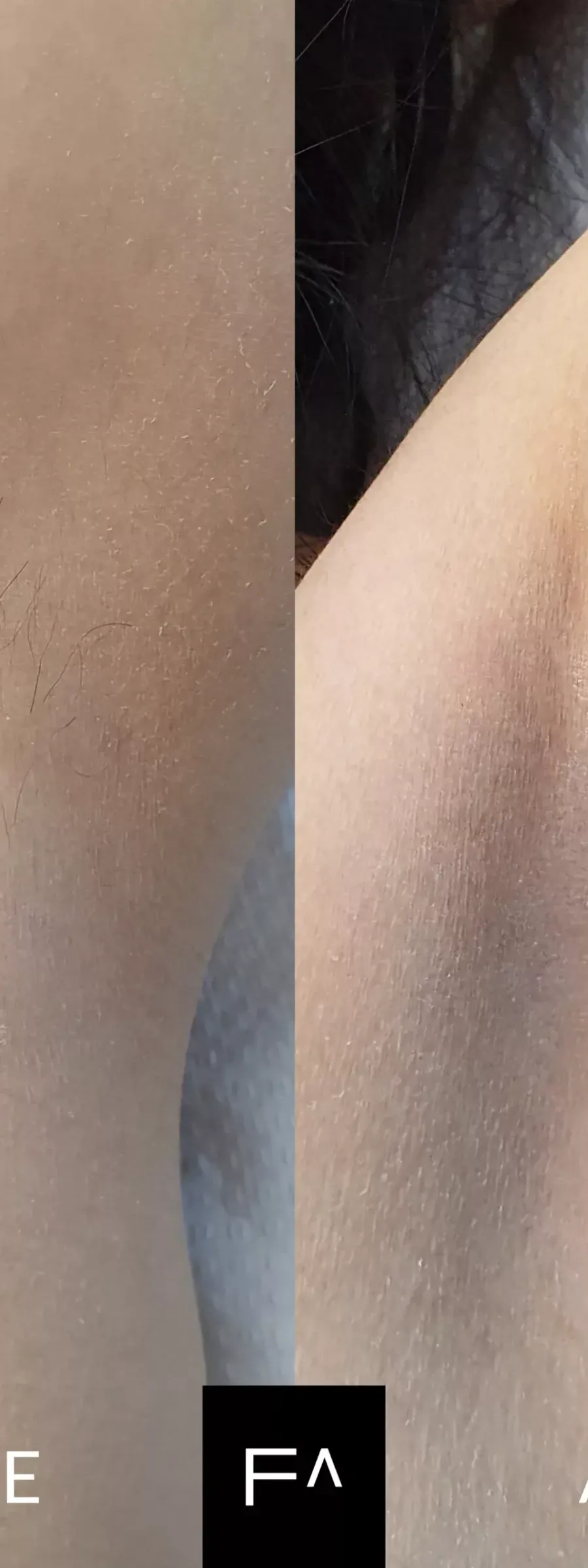
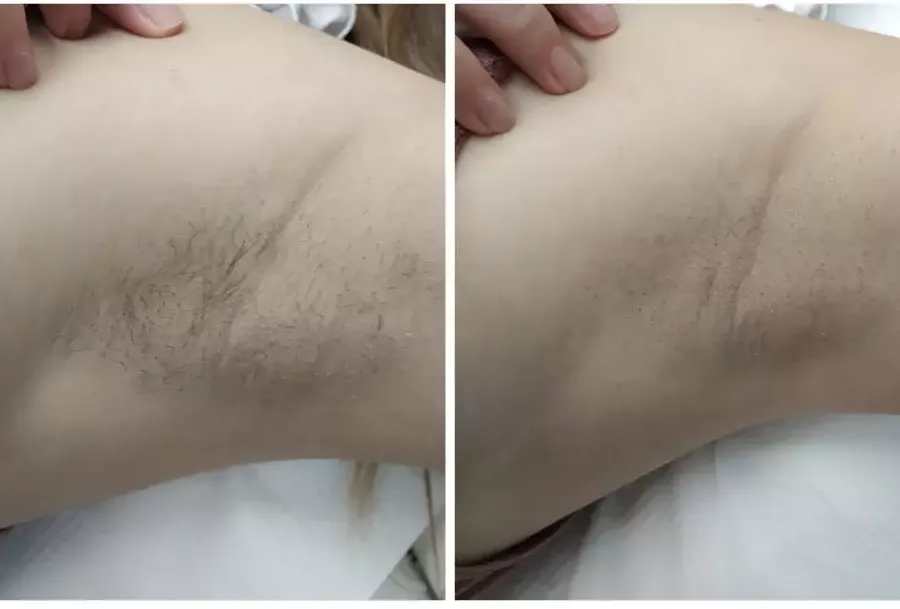
Alexandrite laser is considered one of the top choices for hair removal as it offers long-term hair reduction on the body and face for men and women.With each session, the hair becomes weaker because the Alexandrite laser targets the hair follicle, and gradually hair growth is reduced over the long term.
At Facemed Clinic, hair removal is performed with Candela GentleLaser, which is one of the most advanced Alexandrite laser machines worldwide. Candela's technology is FDA-approved, emitting light at 755nm, which is the ideal wavelength to effectively target the hair follicle and provide long-term hair reduction.
It also has a built-in cooling system, which makes the discomfort of the treatment mild. With the use of the Alexandrite laser, hair removal is fast, comfortable, and safe.
Laser Hair Removal Application Areas
Men
Legs
Laser hair removal on the entire leg, including thighs, buttocks, calves, knees, and toes for greater comfort or an athletic appearance.
Genitals (Men's Bikini)
Laser hair removal across the entire sensitive area from the groin, around and on the penis, testicles, and anus.
Arms/Armpits
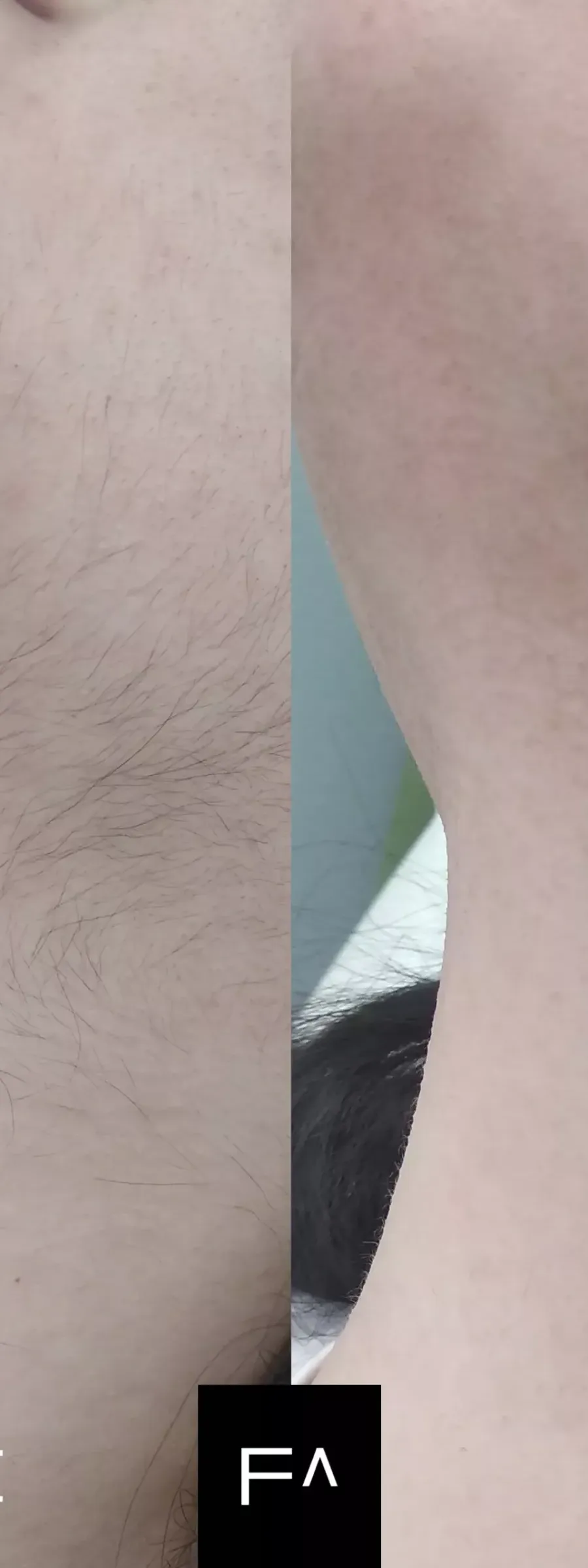
Say goodbye to unwanted hair on arms and armpits, from fingers to shoulders.
Face
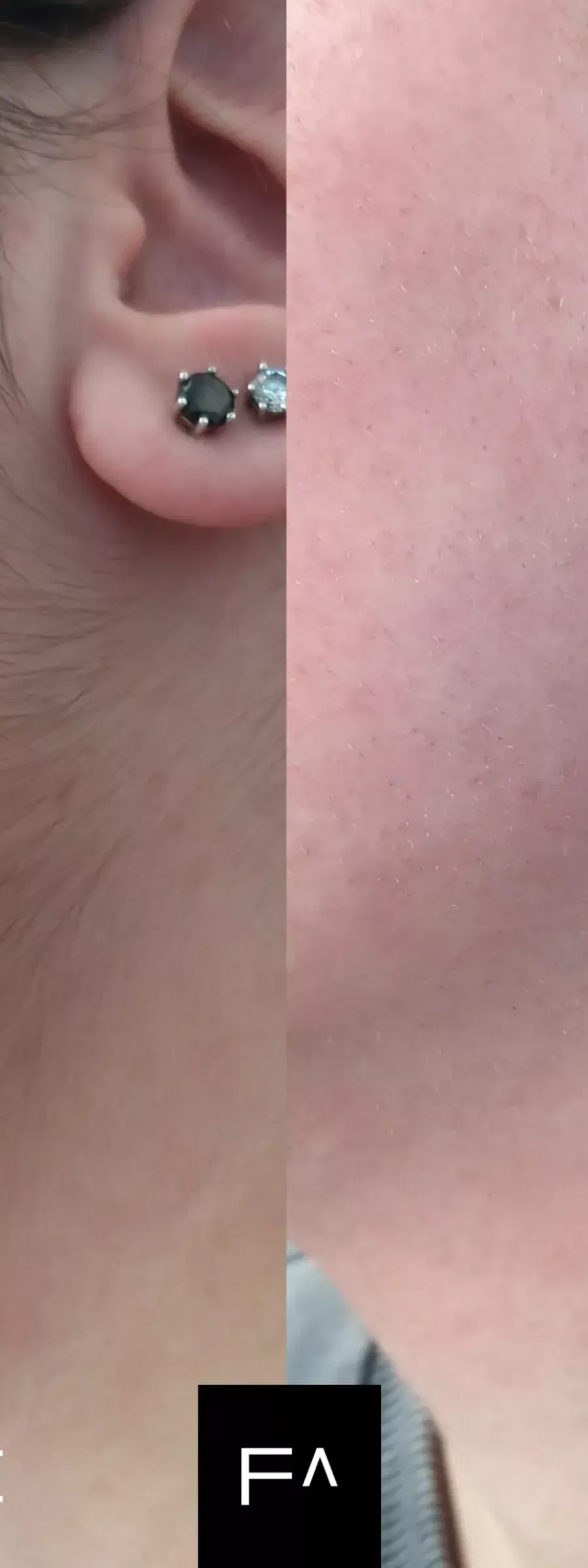
Laser hair removal can help you shape your beard and put an end to hair on your unibrow, nose, and ears.
Chest/Abdomen
Achieve smooth skin on your chest and abdomen with laser hair removal across the entire area.
Back
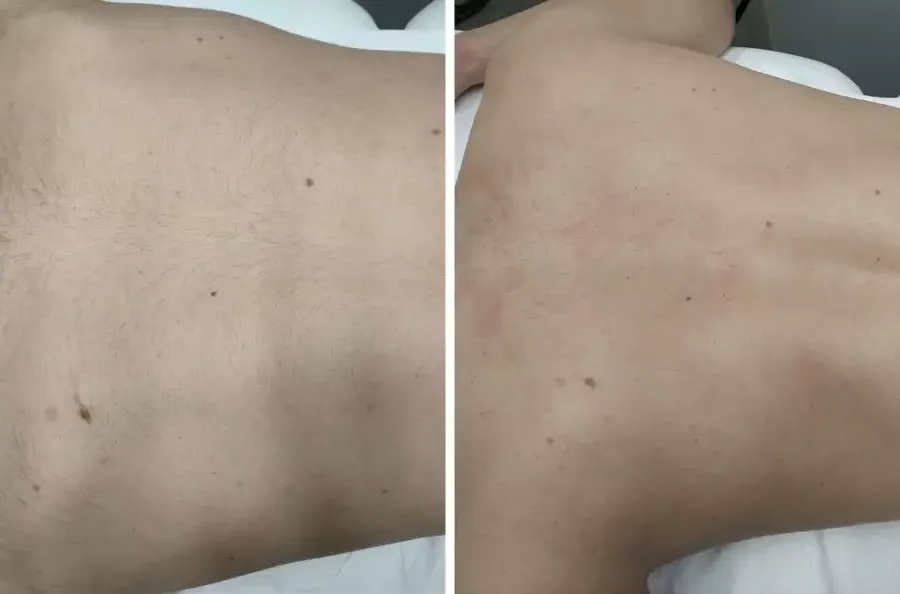
Laser hair removal can cover the entire back, shoulders, neck, and lower back, providing a uniform result.
Session Time and Recovery: What to Expect by Area
Face
Session duration: 10-15 minutes Total sessions: 6-8 (then maintenance) Recovery: No downtime, possible mild irritation for up to 2 hours
Armpits
Session duration: 10 minutes Total sessions: 6-8 (then maintenance) Recovery: Possible mild irritation for up to 2 hours
Bikini
Session duration: 15 minutes Total sessions: 6-8 (then maintenance) Recovery: Mild irritation, up to 24 hours
Legs
Session duration: 30-45 minutes Total sessions: 6-8 Recovery: Mild irritation that subsides quickly
Laser hair removal prices by area
Price per session with the Candela Alexandrite laser. Every package (except face) includes a complimentary follow-up session; maintenance sessions do not.
All prices by area
- Laser Αποτρίχωση - Αλεξανδρίτη — 20€
Άνδρες
- Laser Αποτρίχωση - Αλεξανδρίτη · Άνδρες — Ζυγωματικά ή Αυτιά — 20€
- Laser Αποτρίχωση - Αλεξανδρίτη · Άνδρες — Ώμοι — 35€
- Laser Αποτρίχωση - Αλεξανδρίτη · Άνδρες — Σχηματισμός Γενιών — 35€
- Laser Αποτρίχωση - Αλεξανδρίτη · Άνδρες — Ώμοι & Αυχένας — 50€
- Laser Αποτρίχωση - Αλεξανδρίτη · Άνδρες — Γεννητικά Όργανα (Brokini) — 65€
- Laser Αποτρίχωση - Αλεξανδρίτη · Άνδρες — Ώμοι, πλάτη, μέση & γλουτοί — 130€
- Laser Αποτρίχωση - Αλεξανδρίτη · Άνδρες — Πλάτη & Ώμοι — 80€
- Laser Αποτρίχωση - Αλεξανδρίτη · Άνδρες — Στήθος & κοιλιά — 80€
- Laser Αποτρίχωση - Αλεξανδρίτη · Άνδρες — Πλάτη, ώμοι & μέση — 90€
- Laser Αποτρίχωση - Αλεξανδρίτη · Άνδρες — Γλουτοί & Γεννητικά όργανα — 100€
- Laser Αποτρίχωση - Αλεξανδρίτη · Άνδρες — Πλάτη, στήθος, ώμοι & κοιλιά — 150€
- Laser Αποτρίχωση - Αλεξανδρίτη · Άνδρες — Total Body — 220€
Γυναίκες
- Laser Αποτρίχωση - Αλεξανδρίτη · Γυναίκες — Άνω χείλος — 20€
- Laser Αποτρίχωση - Αλεξανδρίτη · Γυναίκες — Πρόσωπο ή Μασχάλες — 35€
- Laser Αποτρίχωση - Αλεξανδρίτη · Γυναίκες — Πρόσωπο & Μασχάλες — 50€
- Laser Αποτρίχωση - Αλεξανδρίτη · Γυναίκες — Πόδια — 120€
- Laser Αποτρίχωση - Αλεξανδρίτη · Γυναίκες — Μπικίνι — 65€
- Laser Αποτρίχωση - Αλεξανδρίτη · Γυναίκες — Μπικίνι & Μασχάλες — 80€
- Laser Αποτρίχωση - Αλεξανδρίτη · Γυναίκες — Μπικίνι, μασχάλες & Πρόσωπο — 90€
- Laser Αποτρίχωση - Αλεξανδρίτη · Γυναίκες — Full Body (Πόδια - Μπικίνι - Μασχάλες) - Δώρο Πρόσωπο & Γραμμή κοιλιάς — 150€
- Laser Αποτρίχωση - Αλεξανδρίτη · Γυναίκες — Πόδια - Μπικίνι - Μασχάλες - Χέρια - Πρόσωπο — 190€
- Laser Αποτρίχωση - Αλεξανδρίτη · Γυναίκες — Total Body (Όλο το σώμα) — 220€
Where we offer laser hair removal: Athens, Gerakas, Tripoli
Candela GentleLase Alexandrite laser hair removal is available at all three FaceMed Clinic locations, with the same prices and the same medical protocol. Book at the clinic that suits you best.
How many sessions are needed?
With laser hair removal, hair growth does not disappear immediately from the first session, and this is due to the natural life cycle of the hair. The laser targets and destroys hair in the anagen phase (growth) but there are also other phases such as the catagen (transitional) and telogen (resting) phase.At the time of treatment, only approximately 20% of the hairs are in the first stage. Therefore, to achieve long-term hair reduction, additional sessions are needed. In this way, it targets all hairs the moment they pass through the growth phase.
Read in detail how many laser hair removal sessions are needed per area and what affects the result.
The Laser Hair Removal Process: Step by Step
Laser hair removal at Facemed Clinic is a simple and safe procedure. Let's look together at what a typical session entails:
Area Preparation
Before laser application, the area is thoroughly cleansed of any makeup, lotion, or deodorant. If necessary, an anesthetic cream may be applied, especially for sensitive areas.
Laser Application
The specialized expert will apply the laser device to the skin. The laser light beam precisely targets the hair follicles. During application, you may feel a momentary sensation of warmth or a slight prickling. This sensation is quite tolerable for most.
Use of Regenerating and Sunscreen
A moisturizing and soothing cream is applied, as well as sun protection. Instructions are also given by the specialists for the following days.
- Laser Alexandrite (755nm)
- Diode Laser (810nm)
- Nd:YAG Laser (1064nm)
- IPL (Intense Pulsed Light)
Which laser should you ultimately choose?
The ideal laser depends on your phototype, hair color, and your personal pain tolerance. Contact us if you need help finding the ideal laser technology for your needs.
Laser Hair Removal Safety
Safe room & eye protection
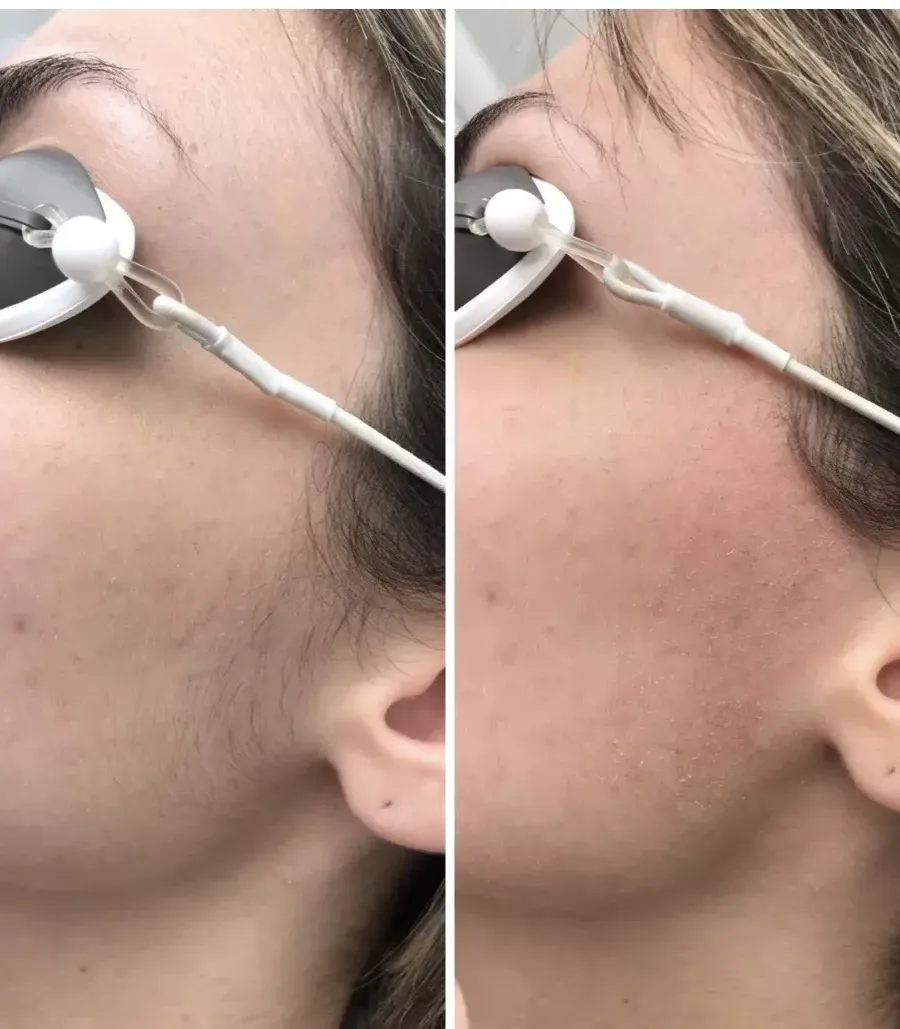
The treatment takes place in a specially designed laser room, and everyone present, including staff and those receiving treatment, wears special protective glasses during the session.
Soothing care after the session
Immediately after the treatment, a soothing cream is applied to the area to reduce any irritation and moisturize the skin.
Post-Laser Hair Removal Instructions
Below are the aftercare instructions for your session:
First 6 hours: no hot showers, sauna or steam
Avoid hot showers, steam baths, or saunas for the next 6 hours.
For the next 5 days: moisturise
Apply moisturizing cream twice a day (the specialist will recommend the appropriate one for you).
Cosmetics
Avoid cosmetic creams with fragrance and color.
Exercise & rubbing
Avoid intense exercise, rubbing the treated areas, and lycra clothing for 3 days.
Sun & solarium
Avoid direct sun exposure or solarium.
Sunscreen SPF 30+
Use sunscreen with a high protection factor (SPF > 30+UVA), reapplying frequently every 2 hours.
Cleansing the area
Gently wash the area with mild soap and pat dry with a towel.
Exfoliation (peeling)
The use of exfoliating products (peeling) in the area is prohibited.
Burning or irritation
In case of severe burning or skin irritation, apply the cream recommended by the specialist twice a day with gentle massage for 2-3 days.
When not to get laser hair removal: Contraindications
Laser hair removal is a safe and effective method for most people, but there are certain cases where it is not recommended or should be avoided:
- First trimester of pregnancy
- Active skin infections or open wounds
- Use of photosensitising medication
- Recent intense sun exposure or tanning-bed use
- Skin conditions such as vitiligo or lupus
- Tattoos in the treatment area
Laser hair removal: What you need to know
How much does laser hair removal cost?
The price depends on the area; the price list above is automatically updated by FaceMed's online booking system, including package deals and a complimentary repeat session for most packages.
Does laser hair removal hurt?
The Candela GentleLase features an integrated cooling system, so any discomfort is mild — usually described as a quick snap or flick. The sensation varies depending on the area and personal tolerance; please inform the specialist if you experience intense sensitivity.
Is it also suitable for men?
Yes. Alexandrite laser is suitable for men and women, for the back, chest, abdomen, shoulders, beard shaping, and the sensitive area. See more about sensitive area hair removal for men.
From what age is laser treatment allowed?
Laser hair removal can generally be performed from the age of 16-18, once hormonal development has stabilized and hair growth has reached its final character. At younger ages, the hormonal changes of puberty can affect the treatment's effectiveness. For minors under 18, parental or guardian consent is always required, and a detailed assessment by the specialist must be conducted to ensure the treatment is appropriate and safe.
Can I have laser treatment during my period?
You can have laser treatment during your period, as menstruation does not affect the treatment's effectiveness. The only thing you might notice is that your skin becomes slightly more sensitive due to hormonal changes. If you generally tolerate it well, there's no cause for concern. Simply inform the specialist if you feel increased sensitivity.
Can I have laser over tattoos?
Laser hair removal is not recommended over tattoos because it can damage their color. However, with the precision of the Alexandrite laser, it can be applied carefully around the tattoo.
Can I have laser after tattoo removal?
After tattoo removal, the skin needs time to fully recover before any other laser treatment. Typically, you need to wait 6-8 weeks after the last tattoo removal session. The area must be completely healed with no redness or sensitivity. The specialist will assess the skin's condition before proceeding with laser hair removal.
What is the difference between Alexandrite laser and diode laser?
Both are effective options for hair removal. Their main difference lies in the wavelength they emit. Alexandrite laser (755nm) better targets hair melanin and is ideal for light skin with dark hair. Diode laser (800-810nm) has a longer wavelength, allowing it to penetrate deeper into the skin and be more effective on darker skin types. See detailed information here about the differences between diode and Alexandrite laser.
Can laser treatment affect lymph nodes?
Lymph nodes are located quite deep beneath the skin. The laser beam has a superficial action and targets only the hair follicle, without affecting internal organs and lymph nodes.
What happens if I have PCOS?
Polycystic ovary syndrome (PCOS) often causes increased hair growth due to high androgen levels. Laser hair removal is highly effective for women with PCOS and can significantly improve quality of life. However, because hormonal fluctuations can cause new hair growth, more maintenance sessions may be needed. Communication with an endocrinologist is recommended to optimize hormonal therapy in conjunction with laser hair removal.
Is there a chance I won't get good results?
There are several reasons that may affect the results, such as hormonal factors, using the wrong type and settings of laser, or early discontinuation of sessions.
Can I have laser hair removal even in summer?
Laser hair removal can be performed all year round, even in summer. However, it is important to avoid excessive sun exposure for at least one week after treatment and to use high-SPF sunscreen to prevent the risk of hyperpigmentation and discoloration.
Where can I get laser hair removal in Athens?
At FaceMed Clinic locations in Ampelokipi (Argolidos 2), Gerakas, and Tripoli, using the same Candela GentleLase and the same prices.
BOOK ONLINE
Book your laser hair removal appointment online in Athens, Gerakas or Tripoli.