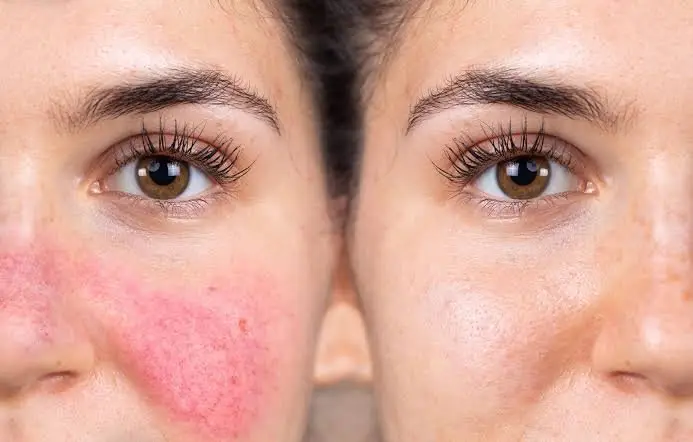
What is rosacea?
Rosacea is a common, chronic skin condition presenting with a wide range of skin and ocular manifestations. It primarily affects the central face (cheeks, nose, forehead, chin) and is more frequent in fair-skinned individuals (Fitzpatrick phototypes I and II). Typical findings include persistent centrofacial erythema, papules, pustules, telangiectasias, and — in advanced forms — phymatous changes such as rhinophyma.
Pathogenesis
The exact mechanisms are not fully understood. The main proposed contributors are:
- Dysregulated innate immunity
- Inflammatory response to skin microorganisms
- Ultraviolet radiation exposure
- Vascular dysfunction
Clinical subtypes
Rosacea is classified into four clinical subtypes, which may overlap in the same patient:
- Erythematotelangiectatic — persistent erythema and visible vessels.
- Papulopustular — inflammatory papules and pustules that resemble acne.
- Phymatous — skin thickening and disfigurement (e.g., rhinophyma).
- Ocular — redness, dryness, and eyelid irritation.
Aggravating factors
Certain factors can trigger flare-ups. Identifying and avoiding them is a cornerstone of management:
- Extreme temperatures (heat or cold)
- Sun exposure
- Hot beverages
- Spicy foods
- Alcohol
- Vigorous exercise
- Irritating topical products
- Emotional stress
- Certain medications
- Impaired skin barrier
Treatment
General approach: avoidance of triggers, gentle cleansing with specialized products, frequent moisturization, strict sun protection, and cosmetic camouflage when needed. Ocular involvement warrants ophthalmologic evaluation.
Pharmacologic treatment: topical and/or systemic agents, tailored to subtype, extent of disease, and prior response. Therapy is always individualized.
Laser and procedural options: lasers are highly effective for telangiectasias and background erythema. Phymatous forms may require surgical intervention, electrocautery, or cryotherapy.
Is rosacea the same as common acne?
No. Although they share some features (papules, pustules), rosacea is a distinct entity characterized by persistent central erythema and telangiectasias, and is not associated with comedones.
Can rosacea be cured permanently?
It is a chronic condition, but it can be well controlled with appropriate treatment, trigger avoidance, and a consistent skincare routine.
When is laser treatment recommended?
When telangiectasias and marked erythema predominate, or in phymatous forms (e.g., rhinophyma). The type of laser is selected individually by the dermatologist.
Can the eyes be affected?
Yes. Ocular rosacea presents with redness, dryness, and eyelid irritation. Ophthalmologic evaluation is recommended alongside dermatologic treatment.