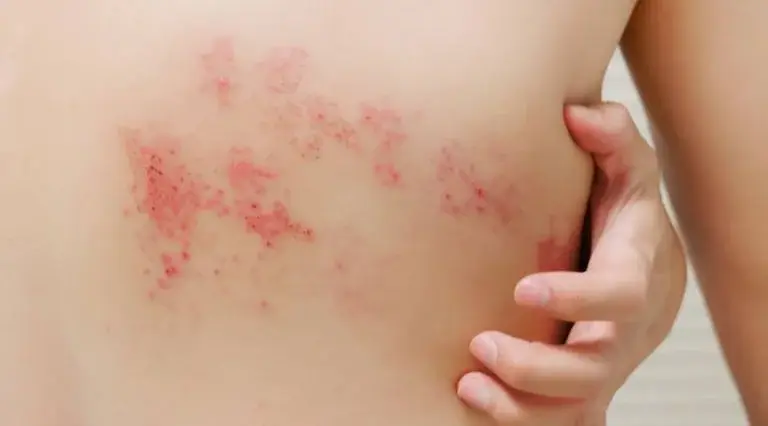
What is Herpes Zoster?
Herpes zoster is caused by the Varicella-zoster virus (VZV), the same virus that causes chickenpox. It is not life-threatening, but it is often particularly painful.
Herpes zoster is not related to the virus that causes genital herpes.<
Those who have had chickenpox host the virus in an inactive, dormant state in their nerve ganglia for the rest of their lives. When the immune system weakens, the virus can reactivate as herpes zoster.
Areas of Appearance
Common areas where herpes zoster appears are:
- Face: starts with a rash on one side of the face, around the eyes, on the nose, or on one side of the neck.
- Torso: on one side, from the spine to the sternum, usually not crossing the midline of the body.
Symptoms
Pain is the most common early symptom, followed by an intense red rash on one side of the body or face. Other symptoms:
- fluid-filled blisters that open and form scabs
- itching (pruritus)
- fever
- headache
- chills
- stomach upset
Transmission
A patient with herpes zoster and “open” blisters can transmit chickenpox — not herpes zoster — to individuals who have not had the disease and have not been vaccinated. Conversely, a patient with chickenpox cannot transmit herpes zoster.
The disease is not contagious before the blisters appear or after scabs have formed.
Diagnosis
If you suspect you have herpes zoster, contact your dermatologist immediately. Diagnosis is usually made with a clinical examination and medical history; laboratory testing of tissue or blister fluid may be requested.
Treatment
There is no treatment that eliminates the virus, but the doctor may prescribe antiviral medications that reduce the duration and severity of the disease and limit potential complications, which — in addition to postherpetic neuralgia — may include:
- skin infections
- neurological problems
- vision loss
Preventive Vaccine
The chickenpox vaccine is included in the national immunization program. The herpes zoster vaccine is recommended for adults 60–75 years old, regardless of whether they have had the disease in the past. Discuss the appropriate vaccination time with your doctor.
Myths & Truths
Everything you need to know about herpes zoster
I think I have herpes zoster. Should I wait a few days to see how it develops?
On the contrary: if you suspect herpes zoster, contact your doctor immediately for treatment to minimize pain and potential complications.
Can stress cause the appearance of herpes zoster?
Stress is linked to a weakened immune system, making it more vulnerable to infections. It can also intensify the pain experienced by the patient.
How long does the pain caused by shingles last?
Many patients, especially those over 50, experience pain or burning (postherpetic neuralgia) — the most common complication of the virus — for several months, and even up to a year after the rash subsides.
Is shingles contagious?
A patient with active blisters can transmit the VZV virus to individuals who have not had chickenpox — causing chickenpox in them, not shingles. Contagiousness ceases once scabs have formed.
Book an assessment appointment
Early diagnosis means less pain and fewer complications. Contact one of our dermatologists immediately.