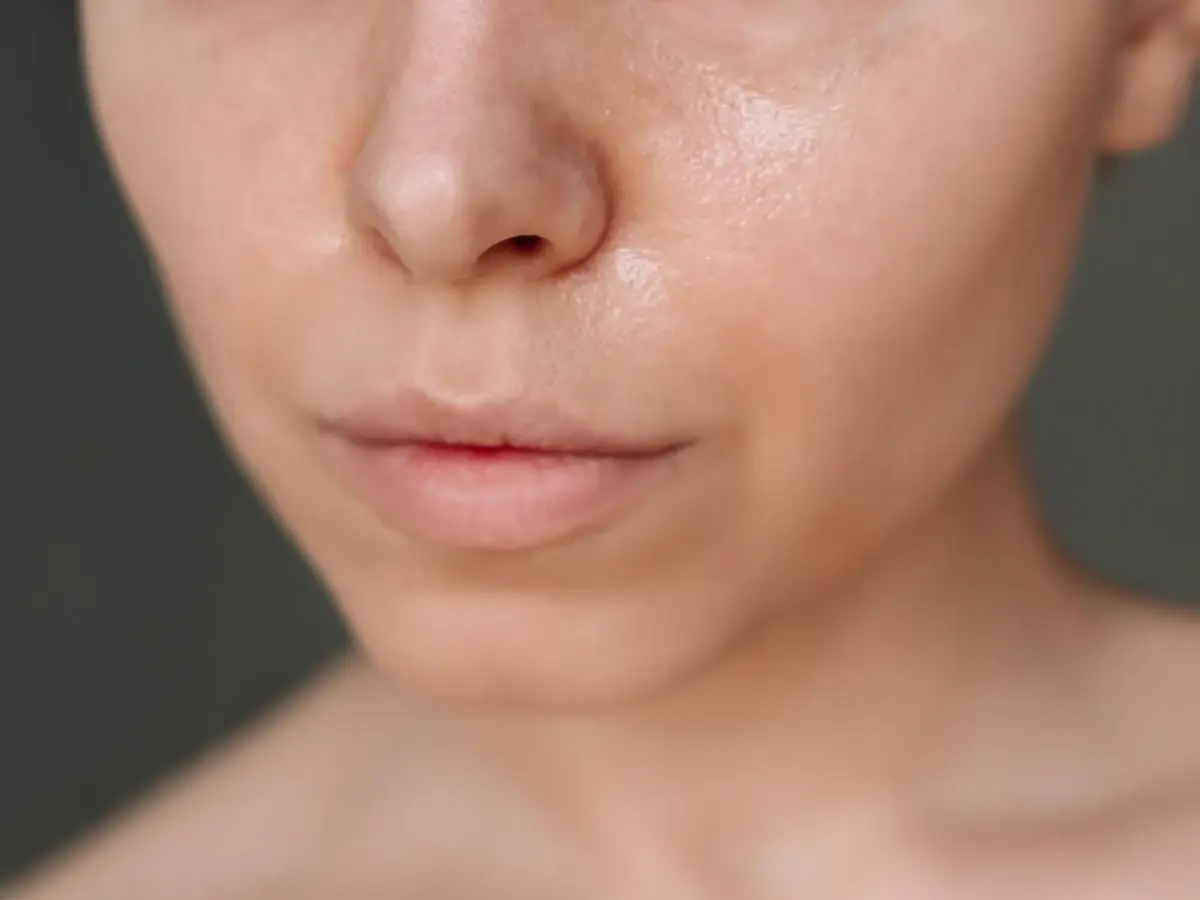
Oiliness & Benefits
While associated with acne, irritations, and unsightly pimples, oily skin also offers many benefits to the complexion.
Oiliness protects and lubricates the skin, and it is characteristic that individuals with oily skin tend to develop fewer wrinkles.
On the face, oily and dry skin can coexist, forming what is known as combination skin, where oiliness is primarily located on the forehead, nose, and chin (T-zone).
Oily skin usually appears with:
- Enlarged pores
- Shiny or dull complexion
- Blackheads or the familiar pimples
The causes of increased oiliness in the skin are:
- Genetic reasons
- Hormonal reasons
- High glycemic index diets
- Stress
- Humidity
Oily Skin & Time
The oiliness and amount of sebum we produce change throughout our lives.
Sebaceous glands are present at birth, showing an increased production trend, which then decreases and spikes again during adolescence.
The goal with oily skin is to balance excessive oiliness with essential moisture.
A visit to a dermatologist will help you follow the appropriate treatment and care for your face, which, it should be noted, may take time to show results.
I have oily skin, do I need moisturizer, or will it cause more oiliness?
Oily skin definitely needs hydration with a light cream. If you skip it, you will dehydrate your skin, and it will rush to compensate by producing more oil, opening a vicious cycle of oiliness.
What skincare products should I use for my oily skin?
You should prefer oil-free products – for cleansing, moisturizing, and makeup – that are non-comedogenic so they don't clog skin pores, causing acne. Also, avoid products containing alcohol.
Many times I unconsciously touch my face or out of embarrassment. Can this cause problems for my skin?
Touching our skin is not a good habit at all. Our hands are not clean, and we can transfer bacteria, germs, etc.