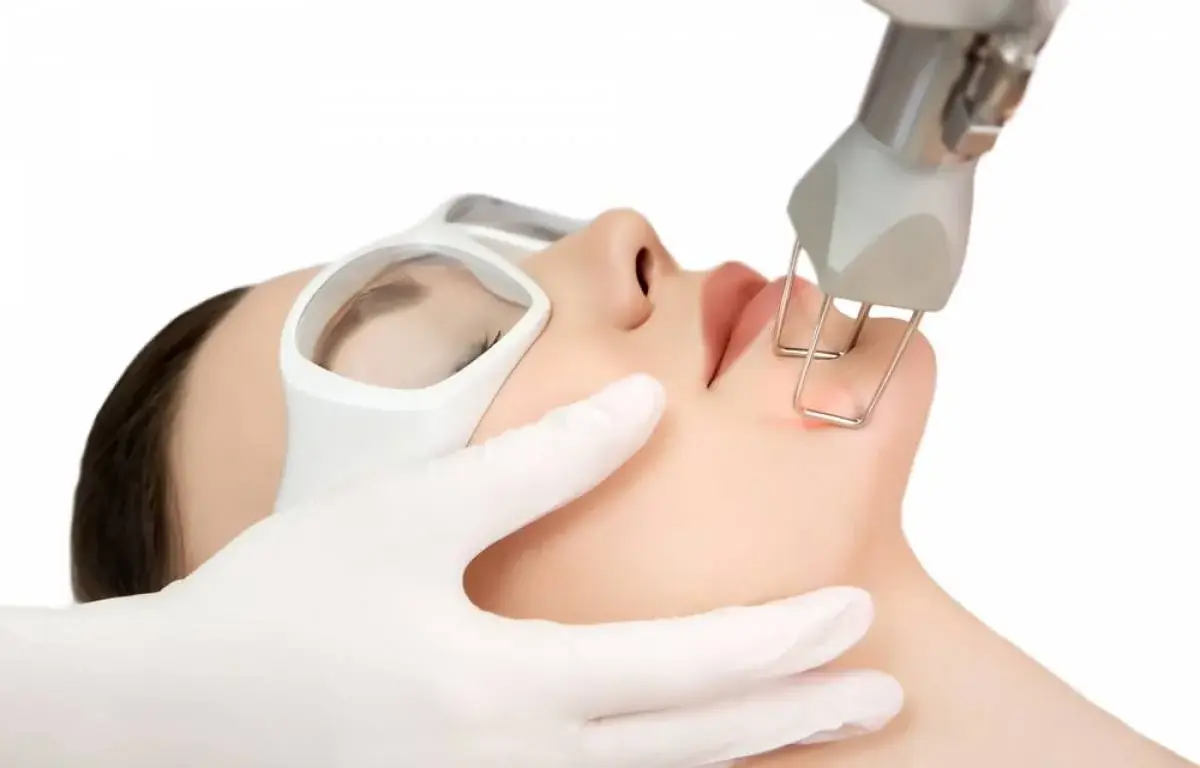
What is fractional laser?
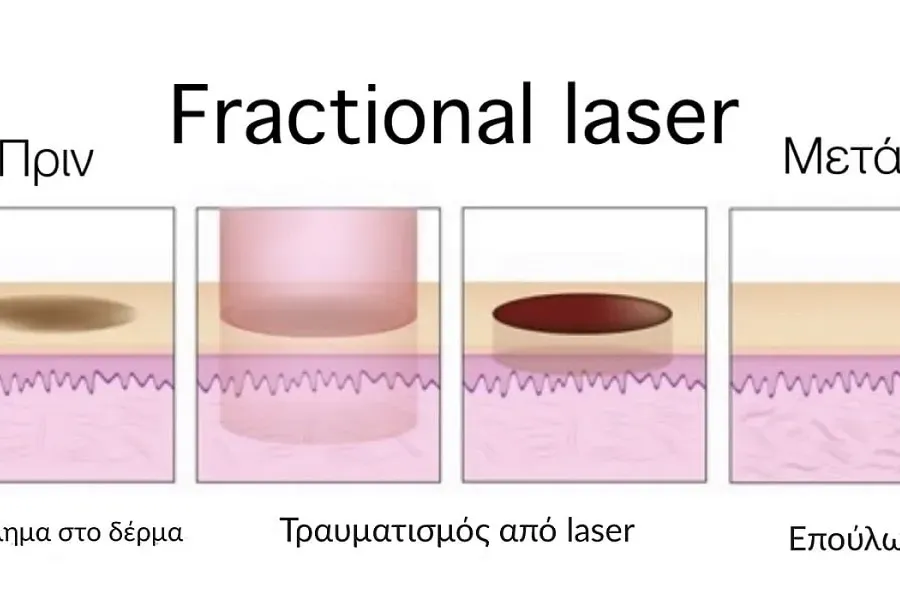
Fractional laser is an advanced technology in aesthetic medicine, also known as “laser skin resurfacing.” The treatment is based on a targeted emission of laser beams, which creates microscopic zones of thermal damage in the skin. These controlled “micro-traumatic” zones activate the production of new collagen and elastin, leading to overall skin regeneration and renewal.
Where fractional laser is performed: at Facemed Clinic in Ampelokipoi (Argolidos 2), Gerakas (Thessalonikis 14) and Tripoli (Dimitros 64), using the same CO₂ fractional laser and the same medical protocol, after personalized assessment. Book an appointment online or by phone at 210 692 9999.
How does fractional laser work?
Fractional laser uses heat to partially and selectively “remove” the superficial layers of the skin (or at least parts of them). Your body then activates its natural healing mechanisms, producing new collagen and elastin, which strengthens the skin's structure.
Within a few weeks, the skin regenerates and gains a firmer texture, brighter appearance, and even tone.
The mild thermal damage “forces” the skin to produce more collagen, which is key for a youthful appearance and elasticity.
Which problems does it treat?
With its multi-level action, fractional laser can offer solutions to various skin problems:
- Wrinkles and fine lines: Ideal for wrinkles on the forehead, “crow's feet” around the eyes, or (vertical wrinkles around the lips).
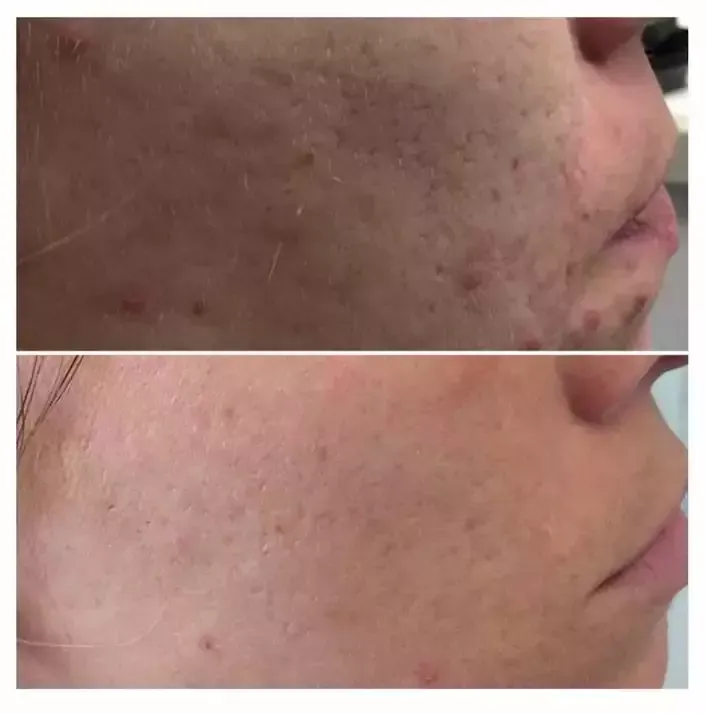
- Acne scars: Improves skin texture and significantly reduces the appearance of scars, leaving the skin smoother and more even.
- Signs of photoaging: Reduces brown spots, sun spots, or other signs related to aging.
- Skin laxity: Although not a substitute for surgical procedures, it can provide noticeable tightening, especially when combined with other treatments.
- Stretch marks: Reduces the intensity of fresh (red) stretch marks and improves their appearance, giving the skin a smoother and more even look.
Fractional laser and acne scars
Acne scars form when acne inflammation reaches deep into the skin and destroys collagen and elastin. With CO₂ laser, controlled thermal damage is caused to the superficial layer, and the skin is forced to regenerate and produce new, healthy collagen. How the laser works:
- Reduces depth: Scar depressions appear less deep, as new collagen “fills” the gaps.
- Normalizes color: Gradually reduces discoloration around the scar.
Fractional laser before and after
Photo before and after fractional laser treatment:
Areas of application for fractional laser
Fractional laser can be applied to many areas of the body. The most common are:
- Face: Combats wrinkles, acne scars, and signs of photoaging, offering significant improvement in overall appearance.
- Neck & décolletage: Helps reduce fine lines, address sagging, and renew skin tone.
- Hands: Reduces signs of aging, making hands look more youthful.
- Body (thighs, buttocks, abdomen): Is useful as it improves stretch marks and eliminates various scars or skin irregularities.
Due to its versatility, it can work for different needs, depending on whether you desire simple rejuvenation or a slightly more invasive resurfacing in areas with a greater problem.
How much does Fractional Laser cost?
The price depends on the area and number of sessions — see the options and book online.
All prices by area
- Fractional Laser CO2 · Πρόσωπο — 150€
Step-by-step fractional laser treatment procedure
The treatment is performed by a specialized doctor and follows the steps below:
Skin preparation
Initially, the skin is thoroughly cleansed to remove impurities, oil, or makeup residue.
Then, a topical anesthetic cream is applied to reduce discomfort from the laser's heat.
Laser application
The doctor adjusts the laser parameters (intensity, penetration depth) according to the skin's needs or imperfections.
Each skin is unique, so the treatment is customized.
The laser precisely passes over the targeted areas and creates microscopic “columns of heat.”
The duration of the session is approximately 20-30 minutes, depending on the application area.
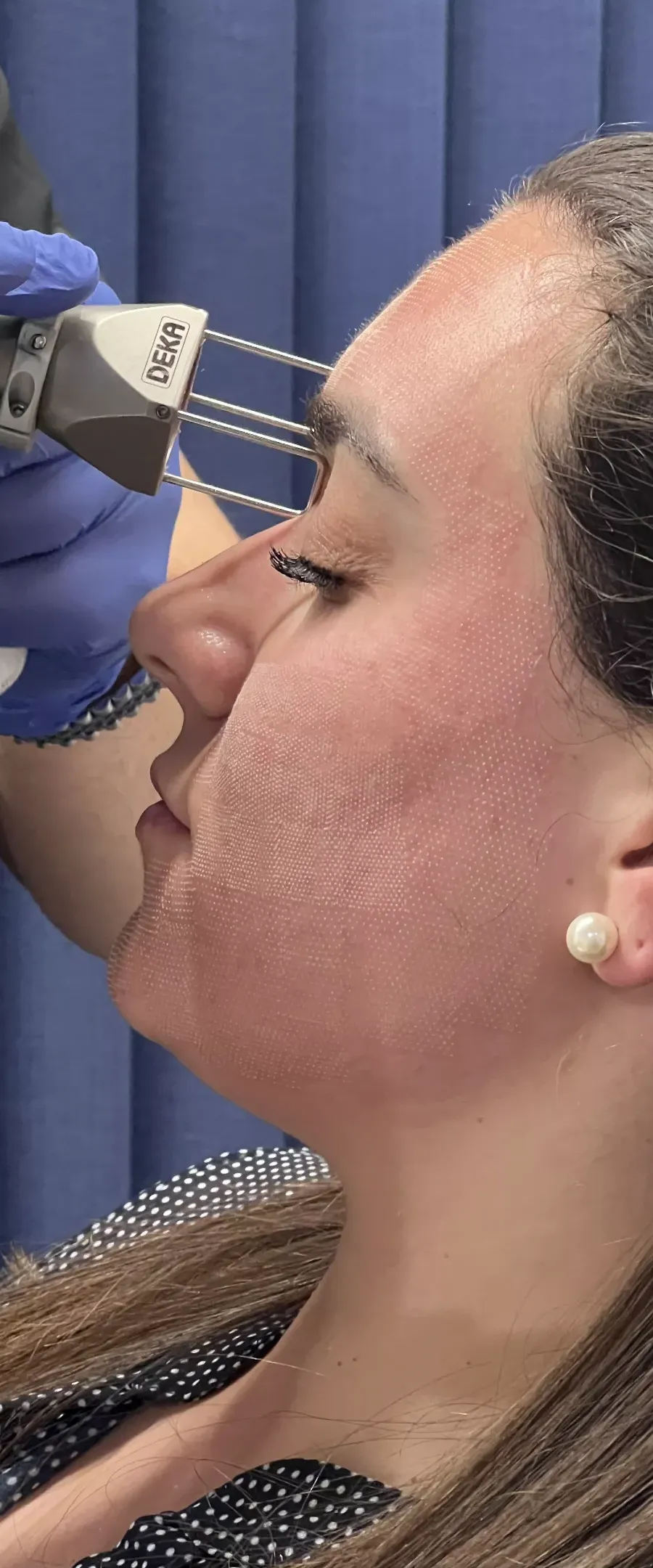
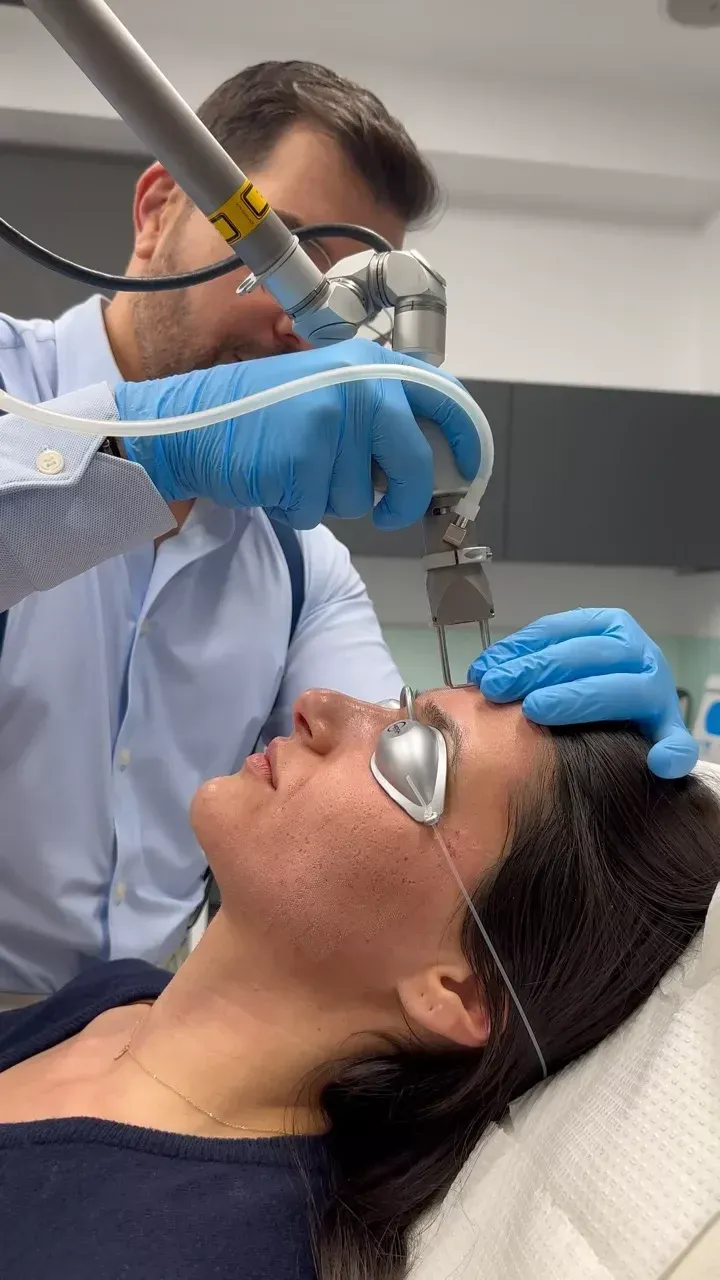
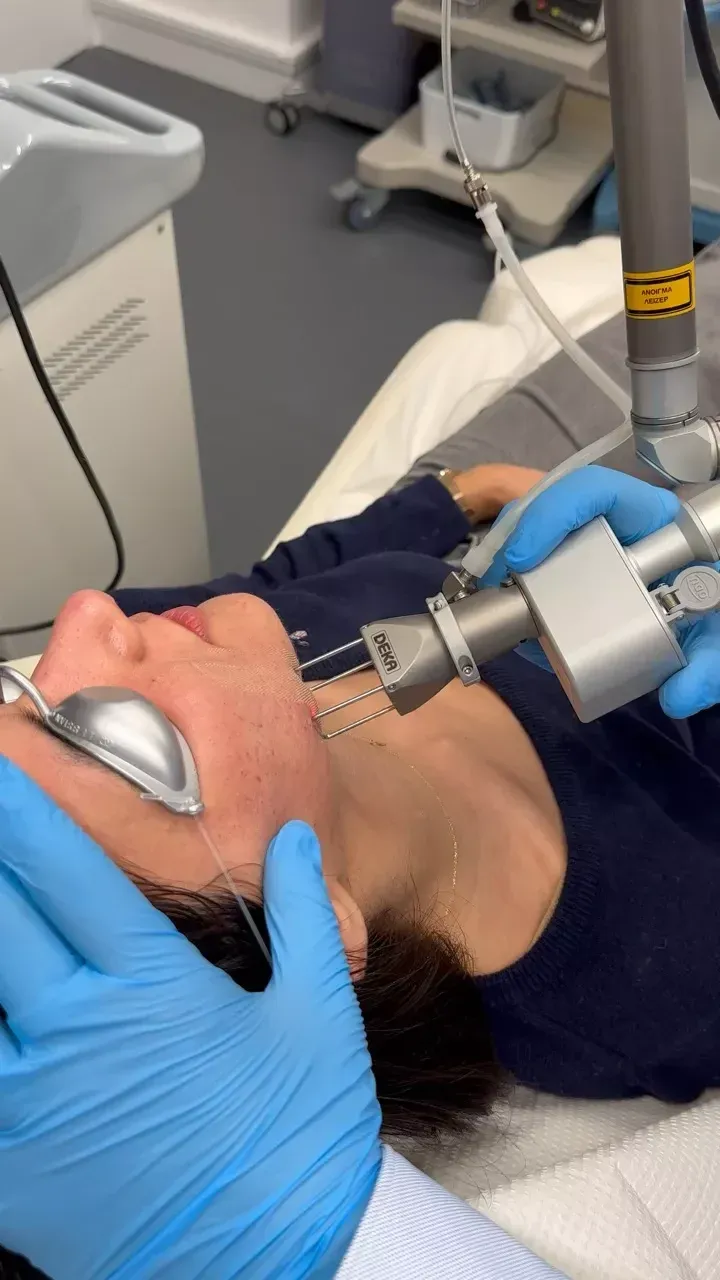
Post-session
Immediately after the treatment, soothing creams are applied to relieve any burning sensation and help the skin calm down.
Because it is fractional, recovery is faster compared to "ablative" lasers.
After CO₂ laser treatment, the skin remains red for about 3-4 days, but fully recovers in approximately 2 weeks.
During this period, avoid intense athletic activities, heat, and try not to sweat. Additionally, do not rub your face and avoid makeup. You can find detailed post-fractional laser instructions here.
Fractional Laser Treatment Procedure
Aftercare and Recovery
After the session, mild to moderate redness usually appears, which may resemble a sunburn. You may feel a slight 'tightness' and there might be some peeling for a few days. This is normal and means the skin is rejuvenating. For best skin recovery:
- Hydration: Use moisturizing creams recommended by your doctor. Good hydration aids in faster healing.
- Sun Protection: It is essential to use a high SPF sunscreen (SPF 30-50). The skin is more sensitive after treatment, so protection from sun exposure is crucial for the final results.
- Avoid harsh products: Do not apply caustic or irritating lotions/masks. Follow the specialist's instructions.
- Gentle daily activities: You can return to work soon, provided you protect your skin and do not use make-up on the first and second day. The total recovery time varies depending on the case, but is usually 7-14 days. For more superficial treatments, it may be even shorter.
Long-term care
First month
- Weeks 1-2: Hyaluronic acid serum 2x daily, gentle soap-free cleanser, SPF 50+ every 2 hours, avoid make-up for the first 48 hours
- Weeks 3-4: Mild moisturizers with ceramides, low-concentration vitamin C serum, continue sun protection
Months 2-6
- After 8 weeks: Introduce retinol for deeper renewal (if approved by the physician)
- Niacinamide: For pores and overall radiance
- Monthly: Deep hydration with professional masks
Annual maintenance
- Annual "booster" session: To maintain results
- Quarterly treatments: Professional hydration
- Daily routine: Anti-aging skincare
Side effects and potential risks of fractional laser
- Redness: This is normal and usually lasts from a few hours to 2-3 days.
- Swelling: Mild swelling, especially in the more sensitive areas of the face, which subsides in 1-2 days.
- Peeling: Mild skin peeling occurs, lasting a few days.
- Irritation or itching: These are usually quite tolerable and managed with special ointments and moisturizers.
- Risk of infection: This can rarely occur if hygiene instructions are not followed.
To reduce any risks from a CO₂ laser, it is advisable to choose a specialized doctor and strictly follow post-treatment instructions.
Combination Treatments for More Impressive Results
The most effective combinations that offer enhanced benefits:
Fractional laser with PRP:
- Accelerates healing
- Enhances natural collagen production
- Offers more intense and long-lasting regeneration
- Growth factors "nourish" the skin during regeneration
RF with fractional laser:
- Radiofrequency prepares the skin for deeper penetration
- Usually requires no additional recovery time
- "Enhanced collagen remodeling" offers long-term benefits for months
Not recommended for
- Pregnancy and breastfeeding: During pregnancy and breastfeeding, your body undergoes hormonal changes, and it is preferable to avoid such treatments. You can always have the treatment later when conditions are more suitable.
- Active acne or skin infections: If you have active acne, herpes, or other skin infections in the treatment area, these issues must be addressed first. Fractional laser can worsen the condition or cause complications.
- Recent isotretinoin use: If you have taken isotretinoin for acne, it is recommended to wait at least 6-12 months after stopping the treatment before undergoing fractional laser, as the skin remains sensitive.
- Very dark skin (phototypes V-VI): In very dark skin tones, there is an increased risk of hyperpigmentation or hypopigmentation after treatment. In these cases, other alternative treatments may be preferred.
- History of keloids or hypertrophic scars: If you tend to form keloid scars, fractional laser may not be the best option, as the treatment relies on controlled injury that could lead to excessive scarring.
- Autoimmune diseases and immunosuppressive therapy: If you have an autoimmune disease or are taking medications that affect healing (e.g., corticosteroids), you should discuss this with your doctor, as it may affect recovery.
- Recent tanning or intention for immediate sun exposure: If you have recently tanned (natural or artificial) or are planning a vacation with intense sun exposure, it is better to postpone the treatment. The skin needs sun protection for weeks after the session.
What is the recovery time for fractional laser?
Usually, redness and mild swelling subside within 3-4 days. Sometimes there may be mild peeling for 4-5 days, but generally, the return to daily activities is quick, especially if you follow the post-fractional laser instructions.
When do fractional laser results become visible?
Results begin to be visible from the first to second week, and the final results gradually appear over the next 2-3 months, as the skin continues to produce new collagen and elastin. After the first treatment: You will feel your skin smoother and brighter. After 1-2 months: Scars and wrinkles improve significantly. After 2-4 sessions: You reach the maximum possible result, as with each session the outcome improves.
Is it a painful procedure?
Generally, it is not considered a painful procedure. Before the session, an anesthetic cream is applied, resulting in pain ranging from minimal to almost non-existent. You might feel a sensation of warmth or burning, but this is temporary.
Is fractional laser also ideal for men?
The treatment offers excellent results for men too. If you have acne scars or wish to reduce fine lines or improve your overall skin texture, this technique is easily adaptable to all needs.
Who is an ideal candidate for fractional laser?
Anyone who wants to address wrinkles, scars, or mild sagging. However, you need to have realistic expectations and discuss with your doctor to ensure there are no contraindications (e.g., severe dermatological condition). See a detailed analysis of the pros and cons of fractional laser and how well it might suit your needs.
What is the cost of fractional laser?
It depends on the area and the number of sessions. The price list on the page is automatically updated by FaceMed's online booking system, and the final price is determined after evaluation.
Should I choose fractional over mesotherapy?
The choice between mesotherapy or fractional is not the same for everyone. The ideal solution depends on your needs, expectations, and circumstances. If you want immediate radiance, deep hydration, and anti-aging prevention, mesotherapy is an excellent choice. If, on the other hand, your goal is a more intensive treatment for scars, pronounced wrinkles, and overall skin restructuring, fractional laser will offer you more substantial results. See a detailed comparison of mesotherapy or fractional.
How many fractional laser sessions will I need?
The number of sessions depends on your skin condition and your goals. For some, 1 session may be sufficient, while others may need 2-4 sessions for optimal results, with an interval of 4-6 weeks between them. You will notice improvement from the very first session, but full results are built gradually as the skin produces new collagen. Your doctor will evaluate your skin and suggest the ideal treatment plan tailored to your needs.
Where is fractional laser performed in Athens?
At FaceMed Clinic in Ampelokipi (Argolidos 2), Gerakas, and Tripoli, using the same CO₂ fractional laser and the same protocol.
Fractional laser or Dermapen?
Fractional laser penetrates deeper and is preferred for acne scars, deep wrinkles, and restructuring with fewer sessions; Dermapen is milder, with a shorter recovery time and more sessions. The choice is made during the evaluation.